

Guest rooms have an awkward little reputation in the world of interiors. They are often the rooms we furnish last, decorate with what is left over, and switch on only when someone announces they are coming to stay. Yet a guest room has a surprisingly important job. It needs to make someone feel welcome without making them feel watched over, and it needs to function intuitively for a person who does not know the house, the switches, or where you have hidden the spare blankets.
Good guest room lighting is one of the simplest ways to make that happen.
It is not about installing more fixtures or creating a miniature hotel suite, it is about thinking through what a person actually does in the room, then giving each of those activities a comfortable, obvious source of light. Reading in bed, finding a glass of water at 2am, getting dressed without standing directly beneath an overhead fixture, checking a mirror, opening a suitcase, or simply winding down at the end of the day all require slightly different kinds of illumination.
The goal is always a room that explains itself.
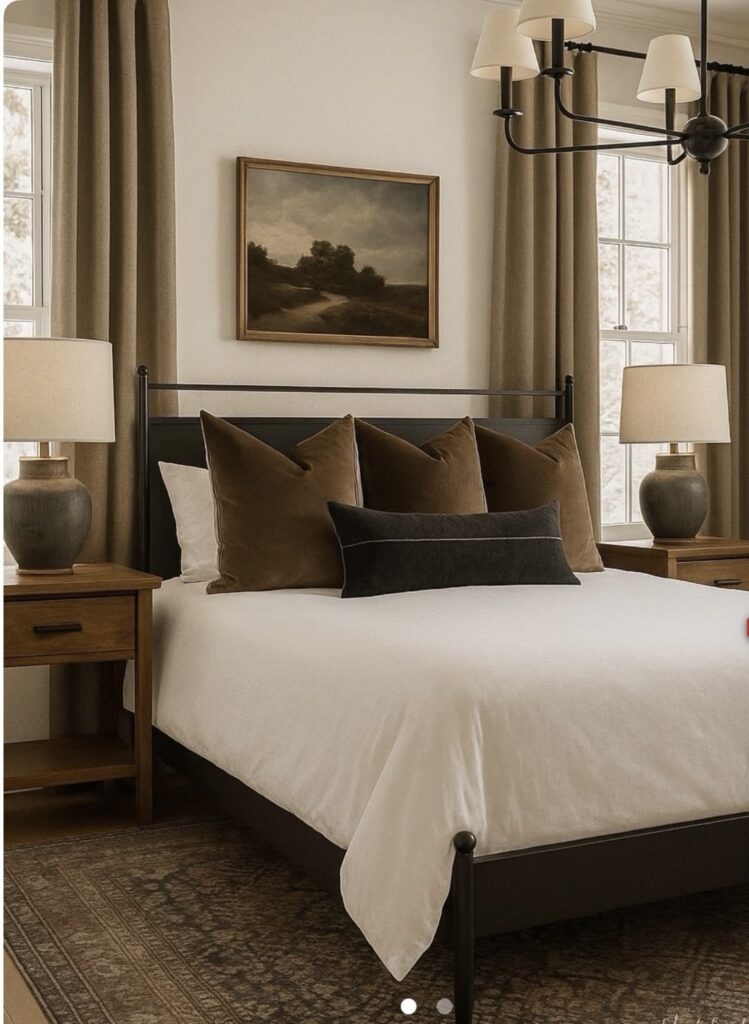
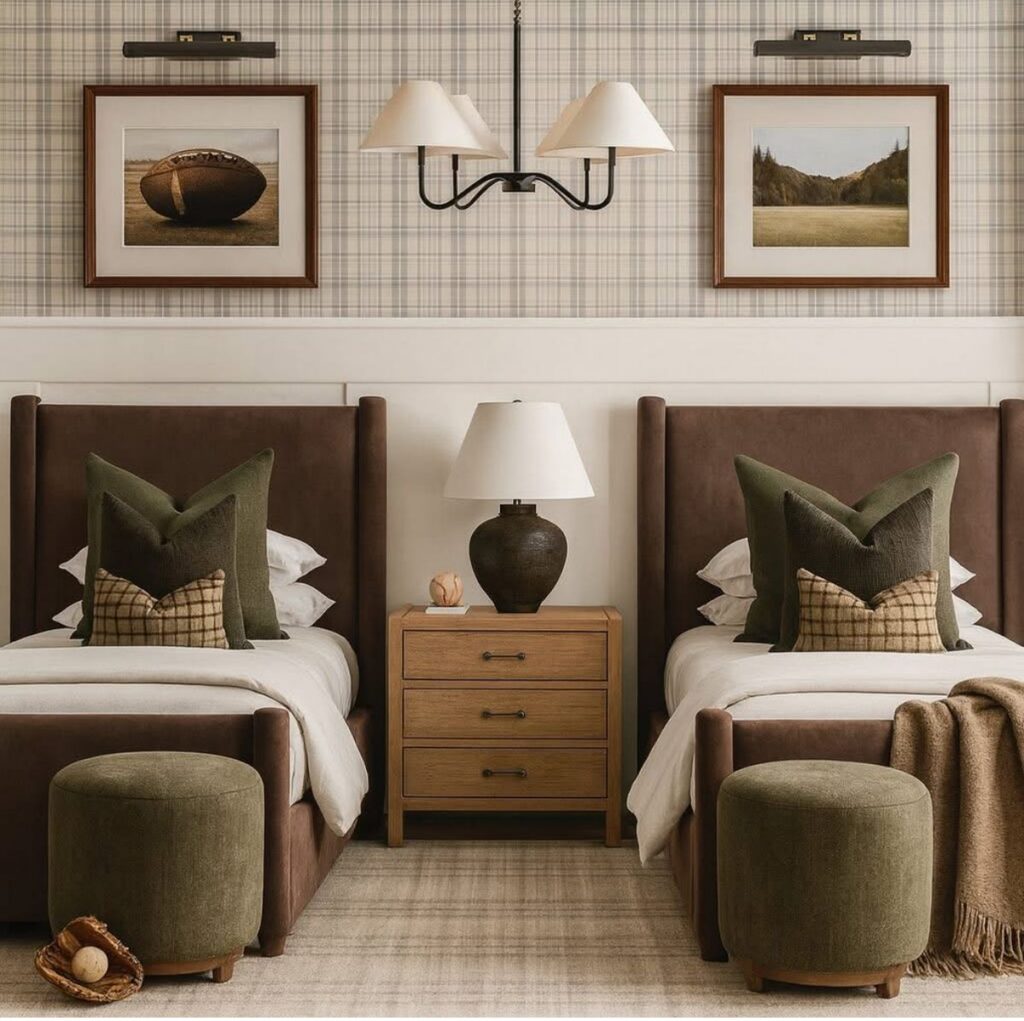
Start With How the Room Will Actually Be Used
Before choosing a pendant, wall light, or bedside lamp, imagine arriving in the room as a guest.
You have a bag in one hand, your phone in the other, and you have no idea which switch controls what. You put your suitcase down, look for a place to charge your phone, turn on a light and discover that it is either painfully bright or nowhere near bright enough to see what you are doing.
This is where good lighting design starts, not with the fixture, but with behaviour.
A guest room generally needs several layers of light because no single source can comfortably perform every task. Ambient light gives the room an overall sense of illumination, task lighting supports activities such as reading or dressing, and lower-level accent lighting helps the room feel softer once the practical jobs are done.
Think of these layers as a conversation rather than a collection of products. The ceiling fixture establishes the general mood, bedside lights make the bed usable, and a lamp on a dresser or console gives another part of the room a reason to glow. Bathroom or wardrobe lighting needs to be functional without becoming clinical. When these sources work together, the room feels intentional even when the lighting itself is barely noticed… and that is usually the point.
Give the Bed Its Own Lighting Language
The bedside is where I would spend the most attention.
A guest should be able to get into bed, read, put their phone down, turn the light off, and get back up again without needing to cross the room. That sounds obvious, but it is surprisingly common for bedside lighting to be treated as decoration rather than infrastructure.
Wall-mounted reading lights can be particularly effective because they keep the bedside table clear and place the light exactly where it is needed. They are also useful in smaller rooms where every square inch of surface matters. A pair of table lamps can create a warmer, more residential feeling, particularly when the lamps have enough visual weight to balance the bed.
What matters most is that the light is comfortable to use.
A beautiful lamp that shines directly into your eyes is not a successful reading light. Nor is a tiny decorative bulb that creates a lovely photograph but leaves you squinting at your book. Consider the height of the fixture, the direction of the light, the spread of the beam, and whether the source itself is visible from the pillow.
This is also a good place for dimming, as guests have different ideas about what constitutes cozy, and nobody should have to choose between a glaring 100 percent and complete darkness.
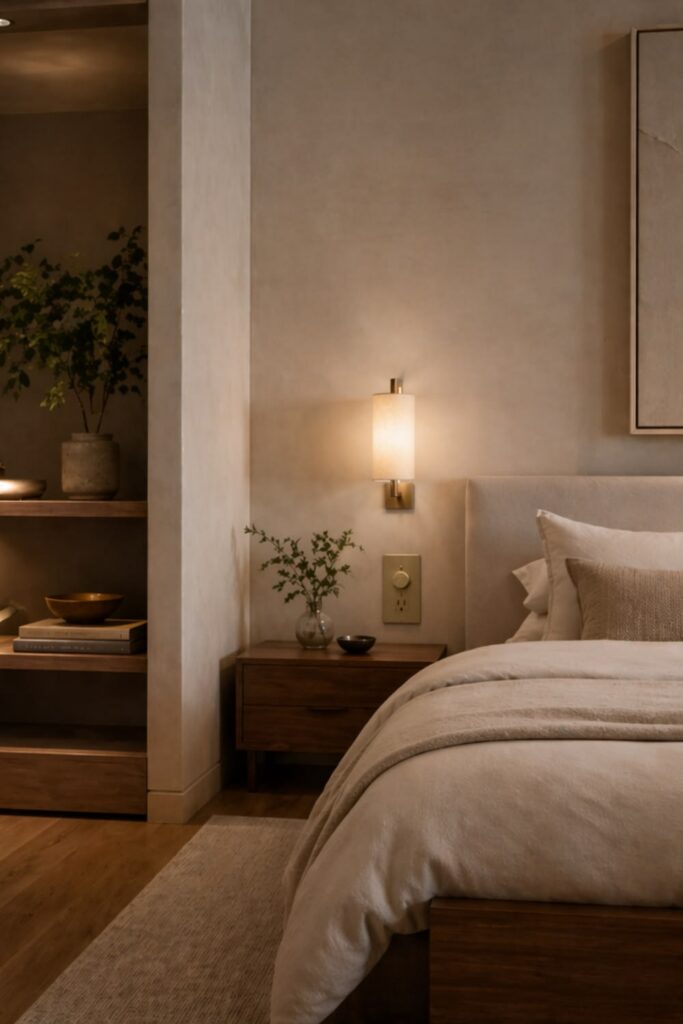

Make the Switches Self-Explanatory
There is a particular luxury in not having to think.
In your own bedroom, you have probably developed an unconscious understanding of which switch does what, but your guest’s have not. If the bedside lamp requires getting out of bed, or the ceiling light switch is hidden behind a door, the room has failed a small but important usability test.
Controls should be positioned according to the way the room is occupied rather than simply according to where the electrician happened to find a convenient wall.
Where possible, give each important lighting layer an obvious control point. Bedside lights should be reachable from the bed, the main room light should be easy to find when entering, and if there is a wardrobe or dressing area, its lighting should be intuitive rather than dependent on a mystery switch tucked behind a nightstand.
This is particularly important for occasional spaces because the less familiar someone is with a room, the more the room needs to communicate through its design.
Do Not Underestimate the Power of a Low Light
One of my favourite ways to make a guest room feel generous is to introduce a light source that sits below eye level.
A small lamp on a dresser, a softly illuminated shelf, a picture light, or even a discreet plug-in night light can completely change the atmosphere of the room. Once the bright overhead light is switched off, these lower sources create a visual rhythm that feels calmer and more domestic.
They are also incredibly useful at night – A guest waking up in an unfamiliar room does not necessarily want to switch on 100 percent illumination. A low-level light provides enough orientation to find the bathroom or water without completely destroying the sleepy atmosphere.
This is where decorative lighting becomes functional in a way that is often overlooked, the lamp is not simply there to make the room look finished, it is there to make the room easier to inhabit.
Think About What Happens at the Wardrobe
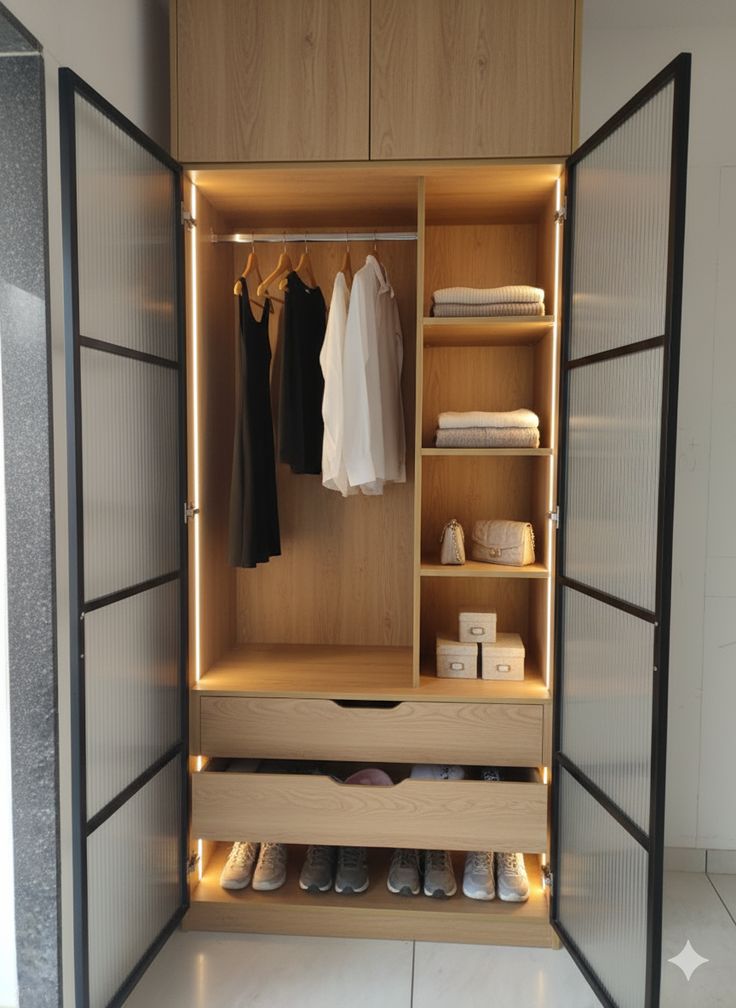
Getting dressed is one of the few activities in a bedroom where general ambient light is rarely enough.
If the wardrobe is tucked into a dark corner, the guest will inevitably end up pulling clothes out into the middle of the room. If the wardrobe has dark interiors, poor lighting can make navy, black, brown and every shade of is this charcoal.. look remarkably similar.
Integrated wardrobe lighting can solve this neatly, particularly when it comes on automatically when the doors open. Otherwise, a carefully positioned ceiling or wall source can provide enough illumination without turning the wardrobe into a retail display.
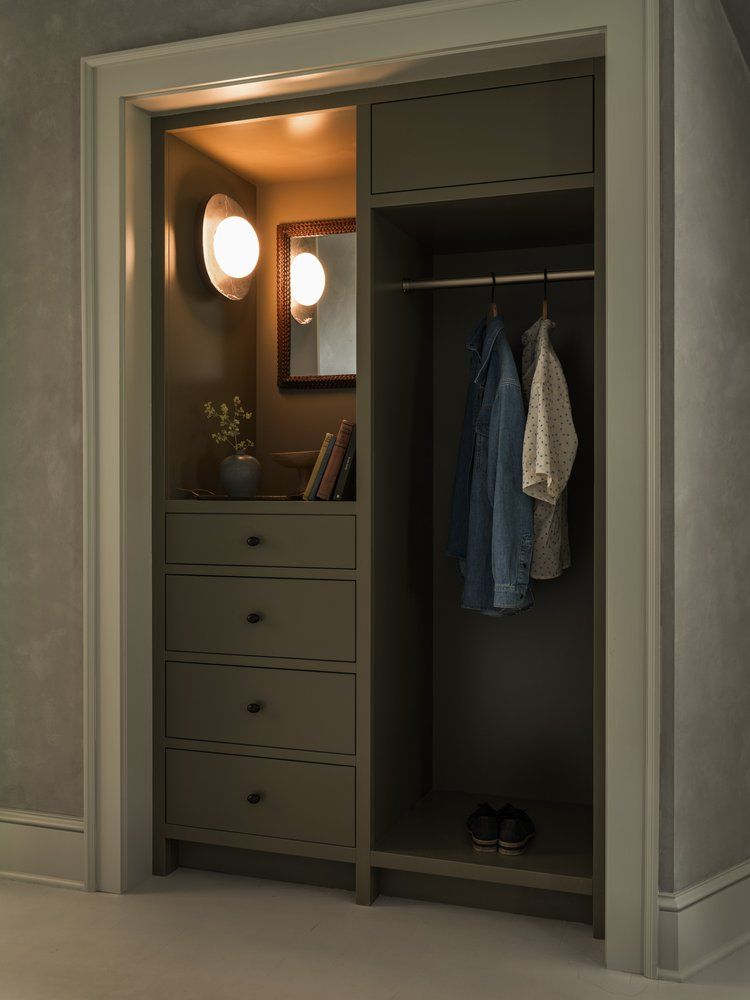
A Guest Room Does Not Need to Look Like a Hotel
There is a temptation to make guest rooms excessively neutral, as though removing personality will make them more universally comfortable… but I would argue the opposite.
A considered guest room can have colour, pattern, artwork, vintage furniture, an odd little chair, or a lamp that you genuinely love.
The lighting should support the character of the room rather than flatten it. A painted room might benefit from warm pools of light that bring out the depth of the colour. A more minimal room may need texture and shadow to prevent it from feeling austere. A room with beautiful joinery can use integrated lighting to reveal the craftsmanship rather than simply illuminate the contents.
The most successful occasional rooms feel like part of the home, not a showroom waiting for a visitor.
A Room That Knows What It Is Doing
The best guest rooms do not announce themselves with a giant neon sign saying WELCOME. They simply make it easy to settle in. That might mean a warm bedside lamp waiting beside a book, or it might be a soft glow from a dresser in the evening.
So if you have a guest room that has gradually become the repository for spare furniture, old lamps and whatever seemed useful at the time, consider looking at it again. Not with the question, how do I make this room look finished? but with the much more useful question, what would make someone feel comfortable here?
That is where good lighting design begins.
And perhaps that is the real test of a considered room: could someone use it beautifully without having to ask you how anything works?
Guest rooms have an awkward little reputation in the world of interiors. They are often the rooms we furnish last, decorate with what is left over, and switch on only when someone announces they are coming to stay. Yet a guest room has a surprisingly important job. It needs to make someone feel welcome without making them feel watched over, and it needs to function intuitively for a person who does not know the house, the switches, or where you have hidden the spare blankets.
Good guest room lighting is one of the simplest ways to make that happen.
It is not about installing more fixtures or creating a miniature hotel suite, it is about thinking through what a person actually does in the room, then giving each of those activities a comfortable, obvious source of light. Reading in bed, finding a glass of water at 2am, getting dressed without standing directly beneath an overhead fixture, checking a mirror, opening a suitcase, or simply winding down at the end of the day all require slightly different kinds of illumination.
The goal is always a room that explains itself.
Start With How the Room Will Actually Be Used
Before choosing a pendant, wall light, or bedside lamp, imagine arriving in the room as a guest.
You have a bag in one hand, your phone in the other, and you have no idea which switch controls what. You put your suitcase down, look for a place to charge your phone, turn on a light and discover that it is either painfully bright or nowhere near bright enough to see what you are doing.
This is where good lighting design starts, not with the fixture, but with behaviour.
A guest room generally needs several layers of light because no single source can comfortably perform every task. Ambient light gives the room an overall sense of illumination, task lighting supports activities such as reading or dressing, and lower-level accent lighting helps the room feel softer once the practical jobs are done.
Think of these layers as a conversation rather than a collection of products. The ceiling fixture establishes the general mood, bedside lights make the bed usable, and a lamp on a dresser or console gives another part of the room a reason to glow. Bathroom or wardrobe lighting needs to be functional without becoming clinical. When these sources work together, the room feels intentional even when the lighting itself is barely noticed… and that is usually the point.
Give the Bed Its Own Lighting Language
The bedside is where I would spend the most attention.
A guest should be able to get into bed, read, put their phone down, turn the light off, and get back up again without needing to cross the room. That sounds obvious, but it is surprisingly common for bedside lighting to be treated as decoration rather than infrastructure.
Wall-mounted reading lights can be particularly effective because they keep the bedside table clear and place the light exactly where it is needed. They are also useful in smaller rooms where every square inch of surface matters. A pair of table lamps can create a warmer, more residential feeling, particularly when the lamps have enough visual weight to balance the bed.
What matters most is that the light is comfortable to use.
A beautiful lamp that shines directly into your eyes is not a successful reading light. Nor is a tiny decorative bulb that creates a lovely photograph but leaves you squinting at your book. Consider the height of the fixture, the direction of the light, the spread of the beam, and whether the source itself is visible from the pillow.
This is also a good place for dimming, as guests have different ideas about what constitutes cozy, and nobody should have to choose between a glaring 100 percent and complete darkness.
Make the Switches Self-Explanatory
There is a particular luxury in not having to think.
In your own bedroom, you have probably developed an unconscious understanding of which switch does what, but your guest’s have not. If the bedside lamp requires getting out of bed, or the ceiling light switch is hidden behind a door, the room has failed a small but important usability test.
Controls should be positioned according to the way the room is occupied rather than simply according to where the electrician happened to find a convenient wall.
Where possible, give each important lighting layer an obvious control point. Bedside lights should be reachable from the bed, the main room light should be easy to find when entering, and if there is a wardrobe or dressing area, its lighting should be intuitive rather than dependent on a mystery switch tucked behind a nightstand.
This is particularly important for occasional spaces because the less familiar someone is with a room, the more the room needs to communicate through its design.
Do Not Underestimate the Power of a Low Light
One of my favourite ways to make a guest room feel generous is to introduce a light source that sits below eye level.
A small lamp on a dresser, a softly illuminated shelf, a picture light, or even a discreet plug-in night light can completely change the atmosphere of the room. Once the bright overhead light is switched off, these lower sources create a visual rhythm that feels calmer and more domestic.
They are also incredibly useful at night – A guest waking up in an unfamiliar room does not necessarily want to switch on 100 percent illumination. A low-level light provides enough orientation to find the bathroom or water without completely destroying the sleepy atmosphere.
This is where decorative lighting becomes functional in a way that is often overlooked, the lamp is not simply there to make the room look finished, it is there to make the room easier to inhabit.
Think About What Happens at the Wardrobe
Getting dressed is one of the few activities in a bedroom where general ambient light is rarely enough.
If the wardrobe is tucked into a dark corner, the guest will inevitably end up pulling clothes out into the middle of the room. If the wardrobe has dark interiors, poor lighting can make navy, black, brown and every shade of is this charcoal.. look remarkably similar.
Integrated wardrobe lighting can solve this neatly, particularly when it comes on automatically when the doors open. Otherwise, a carefully positioned ceiling or wall source can provide enough illumination without turning the wardrobe into a retail display.
A Guest Room Does Not Need to Look Like a Hotel
There is a temptation to make guest rooms excessively neutral, as though removing personality will make them more universally comfortable… but I would argue the opposite.
A considered guest room can have colour, pattern, artwork, vintage furniture, an odd little chair, or a lamp that you genuinely love.
The lighting should support the character of the room rather than flatten it. A painted room might benefit from warm pools of light that bring out the depth of the colour. A more minimal room may need texture and shadow to prevent it from feeling austere. A room with beautiful joinery can use integrated lighting to reveal the craftsmanship rather than simply illuminate the contents.
The most successful occasional rooms feel like part of the home, not a showroom waiting for a visitor.
A Room That Knows What It Is Doing
The best guest rooms do not announce themselves with a giant neon sign saying WELCOME. They simply make it easy to settle in. That might mean a warm bedside lamp waiting beside a book, or it might be a soft glow from a dresser in the evening.
So if you have a guest room that has gradually become the repository for spare furniture, old lamps and whatever seemed useful at the time, consider looking at it again. Not with the question, how do I make this room look finished? but with the much more useful question, what would make someone feel comfortable here?
That is where good lighting design begins.
And perhaps that is the real test of a considered room: could someone use it beautifully without having to ask you how anything works?


LEAVE A COMMENT
Comments