

The first five seconds inside a home are rarely spoken about, but they help form a first impression.
Before anyone notices your furniture, your custom art selection, or the way your room is styled, they feel something. Perhaps it’s a pause, or a sense of ease… or perhaps it’s the opposite. A slight disorientation, an uneasy flatness, or perhaps it’s a feeling that something is unresolved.
More often than not, that feeling is coming from your lighting.
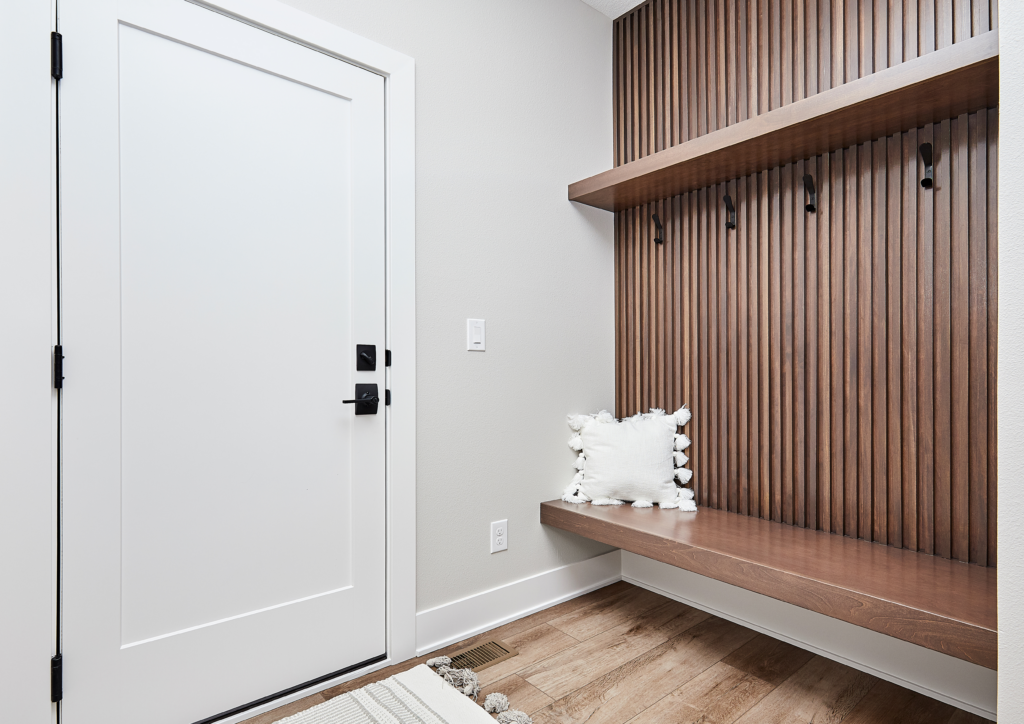
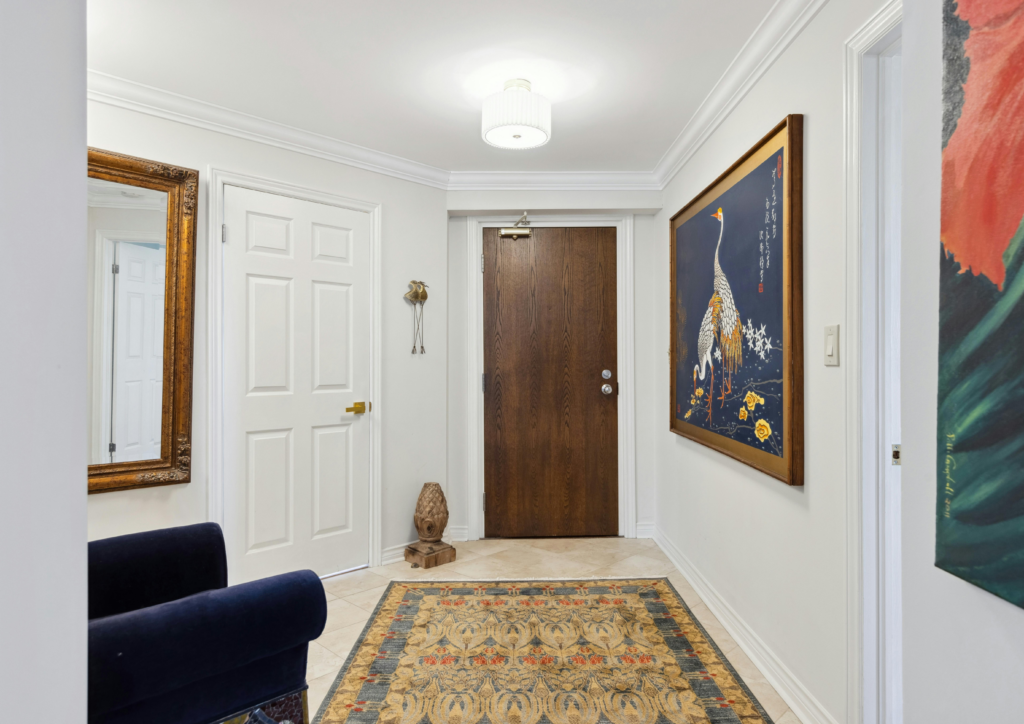
It’s one of the most commonly overlooked elements, and also one of the easiest to change once you begin to notice it. Small adjustments, made with intention, can change how a space is experienced, room by room.
Let’s begin at the point of arrival. The entry.
Why Entryway Lighting Matters
Entryway lighting is absolutely one of the most overlooked parts of most home’s, yet it holds a disproportionate amount of influence. It shapes the arrival, sets the emotional tone, and it tells you if you are about to be relaxed in the space – or overstimulated.
But lighting, in my opinion, isn’t about making a statement.. it’s about creating a transition.
The entryway typically sits between two worlds: Outside and inside, public and private, movement and stillness. Good lighting acknowledges that shift and does not rush you through it, while poor lighting tends to stop a vibe dead in its tracks. A single overhead light switched on out of habit can feel too bright, too central, too abrupt, especially in the evenings.
But thoughtful entry lighting gives your eyes a moment to adjust by offering direction. It begins to tell you how the rest of the home will feel.
The Problem Of Relying On The Big Light
Most entryways default to a ceiling fixture because it feels logical and it’s often already there. But relying solely on overhead lighting can create a few issues:
- It casts light straight down, leaving walls and corners underdeveloped
- It can feel jarring when you first step in, especially in the evening
- It removes any sense of depth or layering
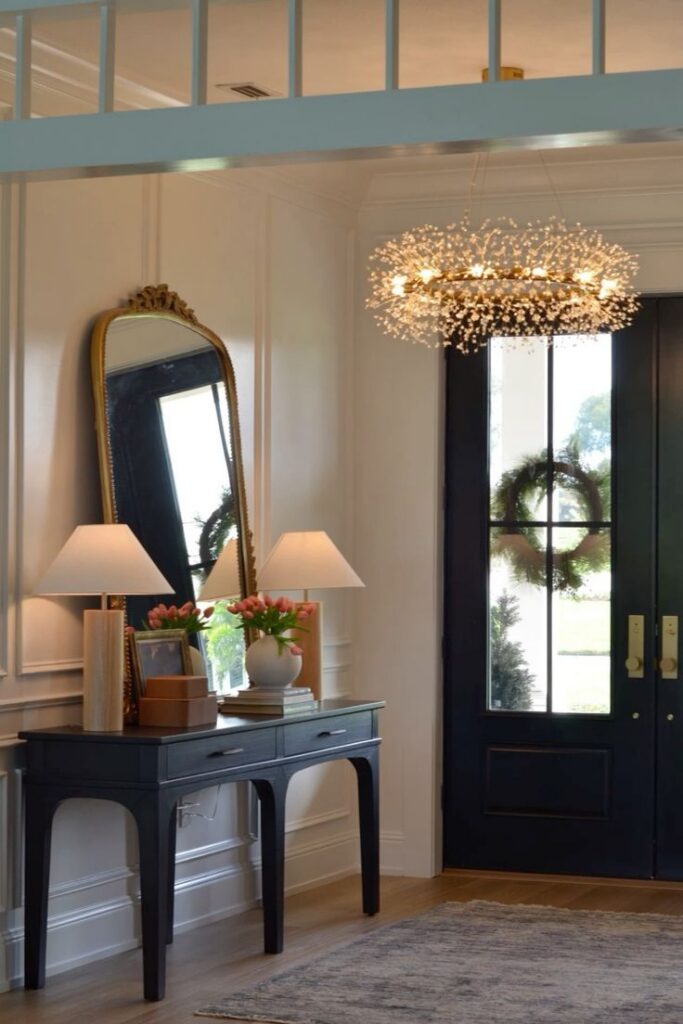
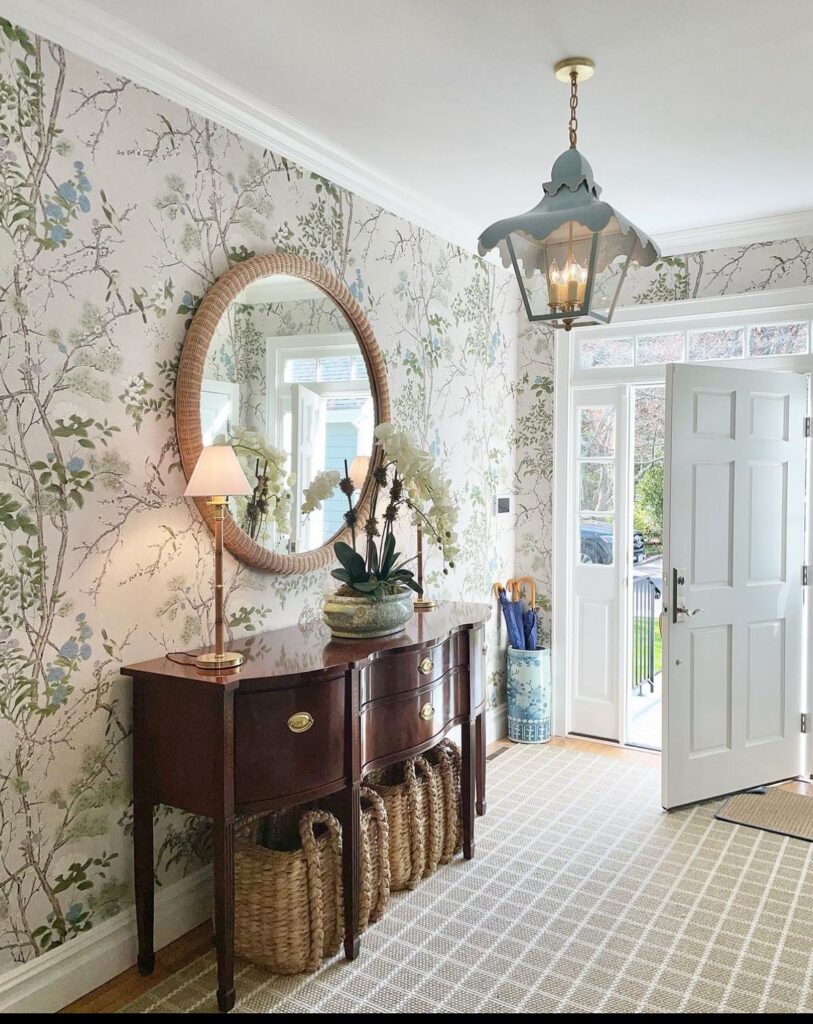
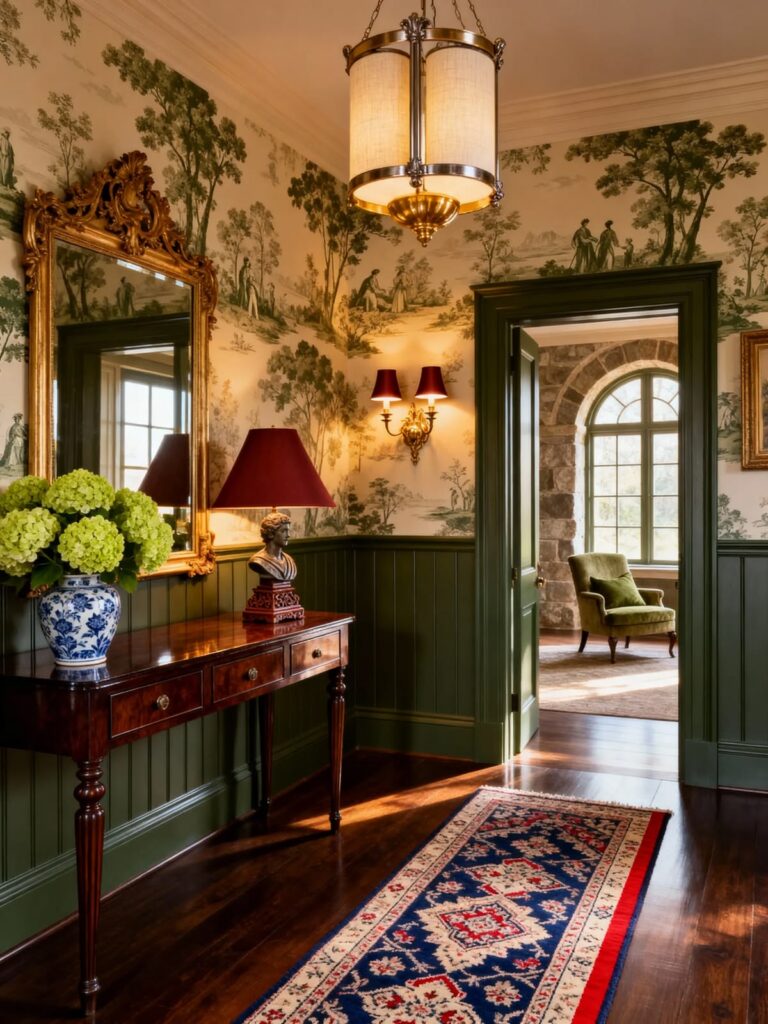
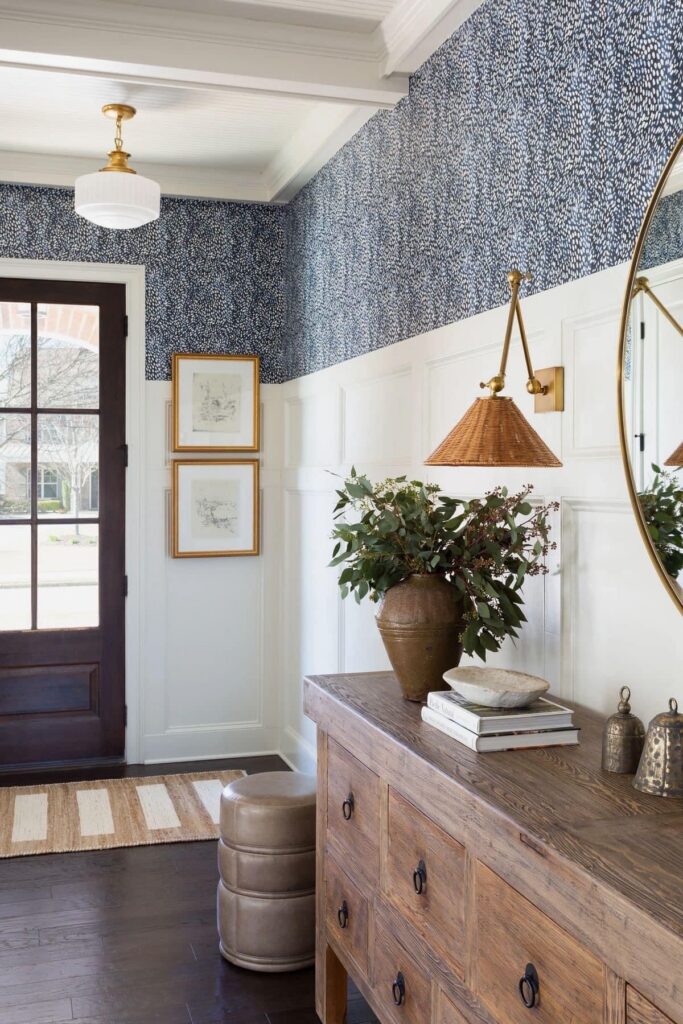
In short, it does the job, but it does not create an experience. A well considered entryway rarely depends on one source, in the photos below you can see It uses a combination of light to create balance and softness.
Start With A Softer Ambient Layer
If you do have a ceiling light, it’ should not dominate the space. It’s best to think of it as background, not the main event.
A softer, diffused fixture works best here-like a flush mount that evenly spreads the light. This ensures the space is visible without feeling exposed. I always recommend, if possible, put it on (or upgrade to) a dimmer switch. Entryway lighting should adjust to time of day as morning light has a different energy to evening arrival, and your light should reflect that.
Add A Human Scaled Light Source
This is where entryways begin to feel considered.
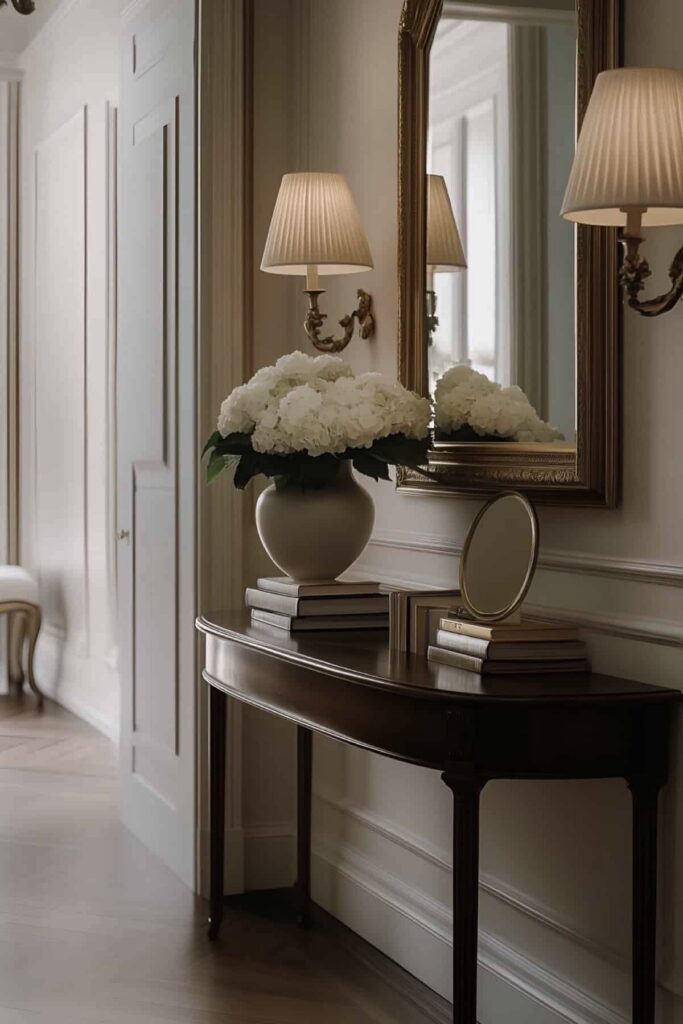
Your vintage table lamp, a favourite wall sconce, or even a small floor lamp introduces light at eye level… and this changes everything.
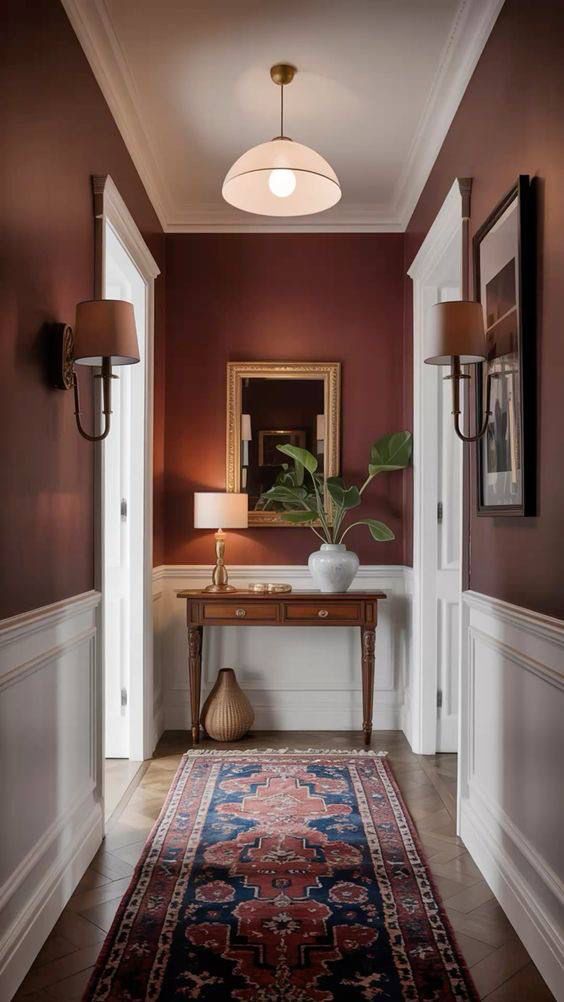
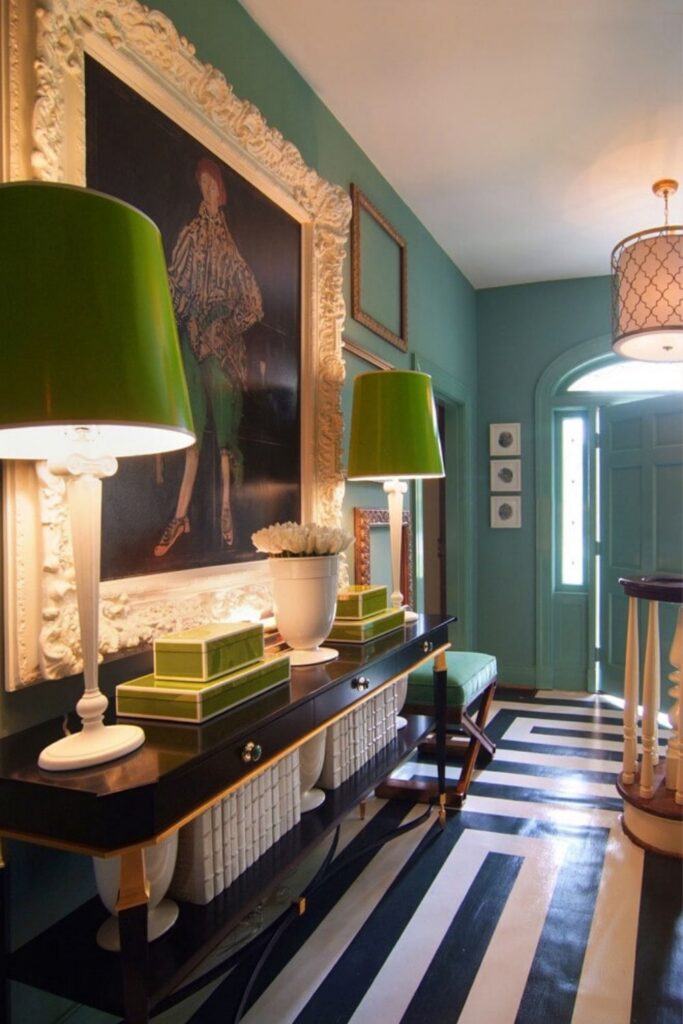
It creates a sense of intimacy, draws you in, and makes the space feel lived in rather than purely functional. This layer of entryway lighting is often what people respond to without realising. It is what makes a home feel welcoming rather than simply well-lit.
If you have a consol table, this is a great place to start with a small lamp.
Use Light to Guide Movement
By know you may know that lighting can do more than illuminate. My favourite part of lighting design is using light to move through a space. In an entryway, this might mean:
- Highlighting a path into the home
- Drawing attention to a key feature such as artwork or a mirrow
- Creating a visual pause before the next room
Wall lights or subtle accent lighting can help with this. They give structure without needing to be obvious.
This is especially useful in larger or open plan homes where the entryway blends into other areas. Light becomes a way of defining where one space ends and another begins.
Pay attention to Shadows, not Just Brightness
One of the most common mistakes in entryway lighting is focusing on only how bright the space is.
Brightness does not create comfort.
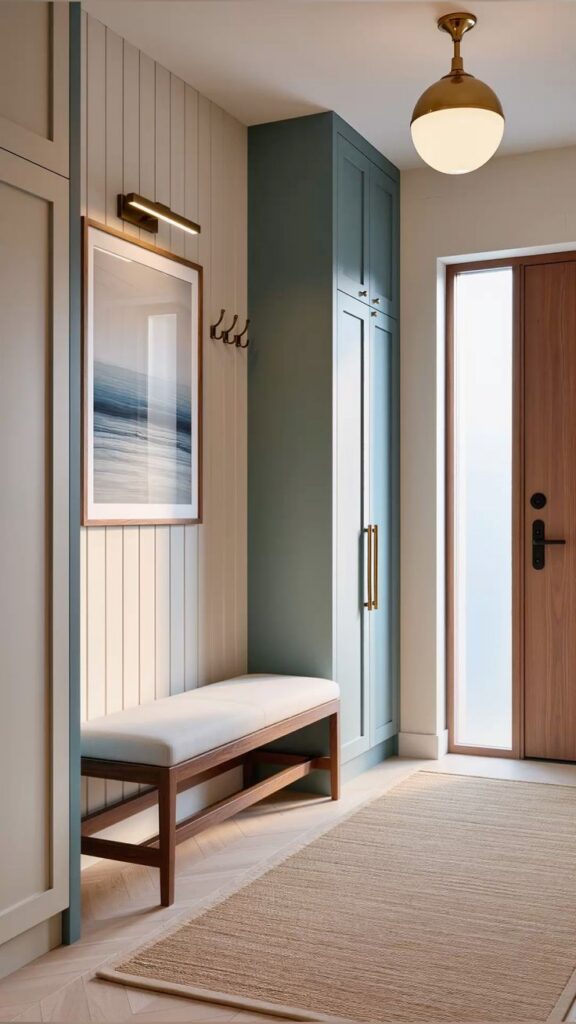
Shadow plays an equally important role by adding depth, softening edges and allowing the eyes to rest. A completely evenly lit entryway can feel very flat as there is no contrast, no variation, and no sense of atmosphere.
Instead, aim for balance by letting some areas fall slightly into shadow. Allow the light to create small moments rather than exposing every detail.
Consider What You See When You Enter
Stand at your front door and look in.
What does your eye land on first? This is where your lighting should focus.
It might be a piece of art, a textured wall or a simple vignette – whatever it is, your entryway lighting should support it.
This creates an immediate sense of intention by telling anyone entering that the space has been thought about.
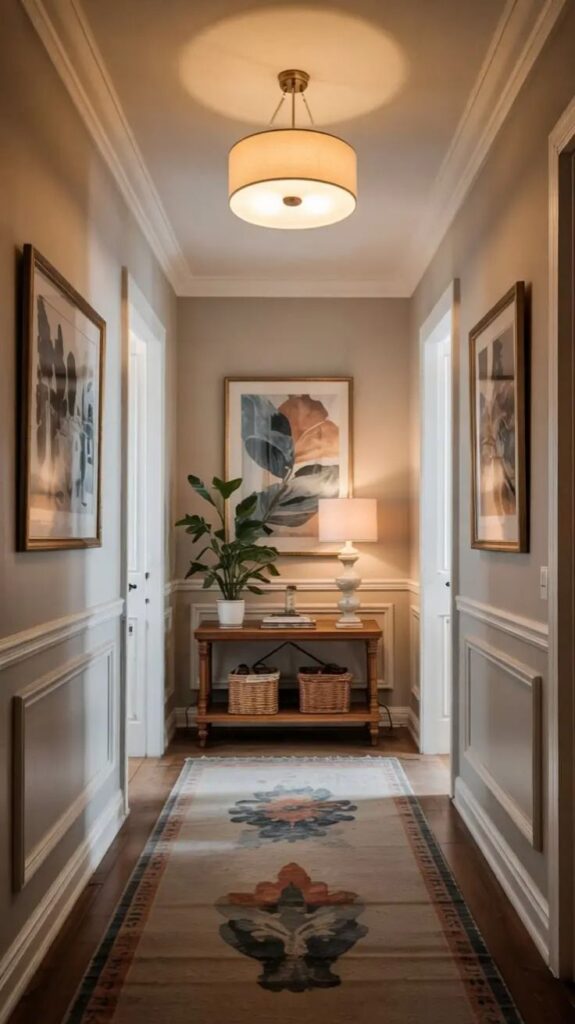
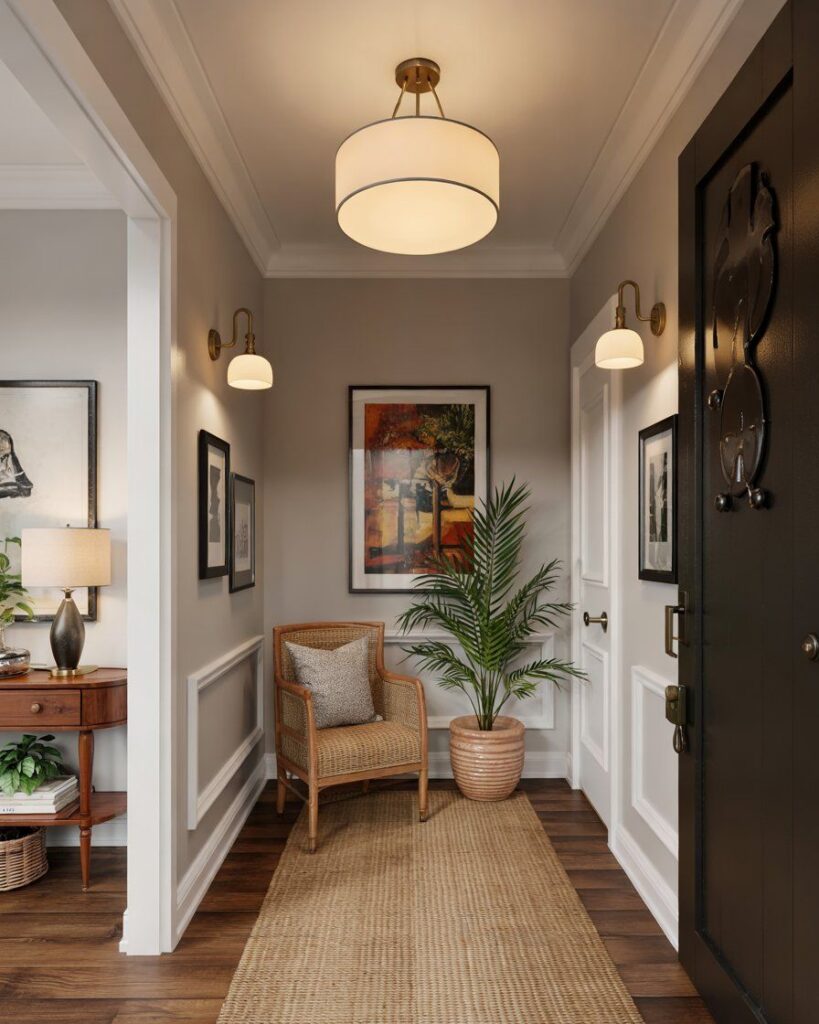
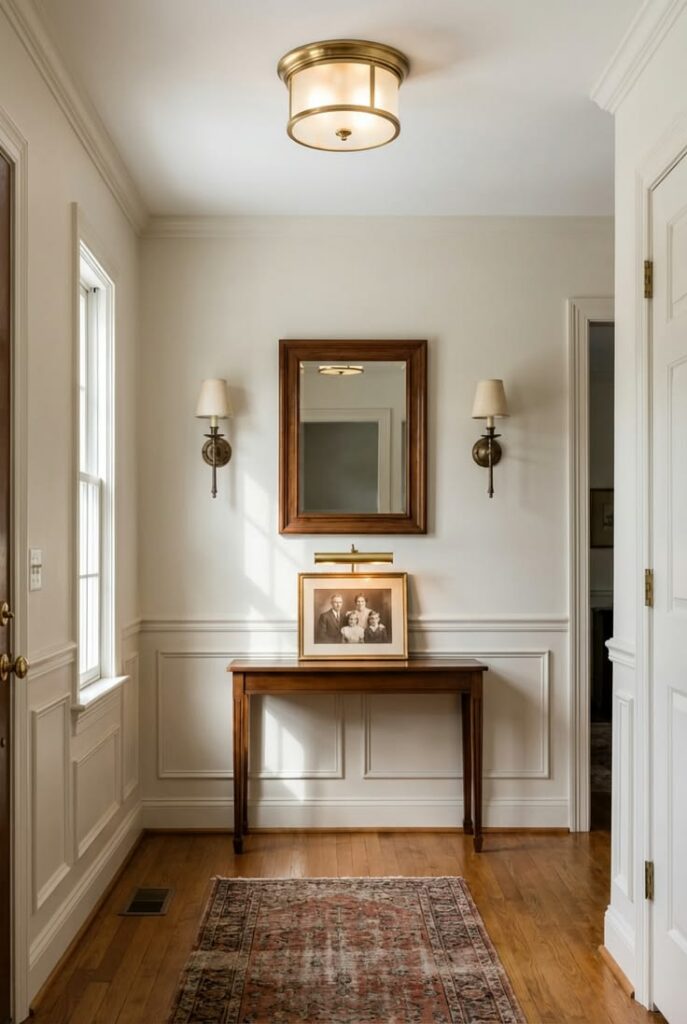
Without this the eye tends to wander as nothing anchors it. Which can lead to the space feeling unresolved, even if everything else is in place.
Colour Temperature Matters
The quality of light is just as important as it’s placement.
Cool or blue-toned lighting can feel stark and uninviting in an entryway. It tends to belong in more task-driven environments. While warmer tones create a softer more welcoming atmosphere, which aligns better with the idea of arriving home, especially in the evening.
That said, it’s not about going overly warm (the goal is balance) something that feels natural and easy on the eyes.
Consistency also matters because if your entryway lighting feels completely different from the adjoining spaces, the transition can feel abrupt.
A Final Note on Restraint
It can be tempting to overcorrect once you start thinking about lighting. More fixtures! More layers! More fixtures!
But entryway lighting works best when it’s restrained. It’s good to remember you are not designing a feature moment, you are shaping a feeling. A calm grounded arrival, a subtle shift from inside to outside, a space that organically holds your attention.
Bringing it Together
When done well, entryway lighting is almost invisible. You don’t notice the fixtures first, you notice how the space feels. Imagine you step inside your entryway and everything settles, everything feels considered. That feeling will carry through the rest of the home in our next journal entry: Living room lighting that doesn’t rely on the big light.
I’d love to know if you are ready to try some new entryway lighting? Leave a comment below, or send me an email: here
The first five seconds inside a home are rarely spoken about, but they help form a first impression.
Before anyone notices your furniture, your custom art selection, or the way your room is styled, they feel something. Perhaps it’s a pause, or a sense of ease… or perhaps it’s the opposite. A slight disorientation, an uneasy flatness, or perhaps it’s a feeling that something is unresolved.
More often than not, that feeling is coming from your lighting.
It’s one of the most commonly overlooked elements, and also one of the easiest to change once you begin to notice it. Small adjustments, made with intention, can change how a space is experienced, room by room.
Let’s begin at the point of arrival. The entry.
Why Entryway Lighting Matters
Entryway lighting is absolutely one of the most overlooked parts of most home’s, yet it holds a disproportionate amount of influence. It shapes the arrival, sets the emotional tone, and it tells you if you are about to be relaxed in the space – or overstimulated.
But lighting, in my opinion, isn’t about making a statement.. it’s about creating a transition.
The entryway typically sits between two worlds: Outside and inside, public and private, movement and stillness. Good lighting acknowledges that shift and does not rush you through it, while poor lighting tends to stop a vibe dead in its tracks. A single overhead light switched on out of habit can feel too bright, too central, too abrupt, especially in the evenings.
But thoughtful entry lighting gives your eyes a moment to adjust by offering direction. It begins to tell you how the rest of the home will feel.
The Problem Of Relying On The Big Light
Most entryways default to a ceiling fixture because it feels logical and it’s often already there. But relying solely on overhead lighting can create a few issues:
- It casts light straight down, leaving walls and corners underdeveloped
- It can feel jarring when you first step in, especially in the evening
- It removes any sense of depth or layering
In short, it does the job, but it does not create an experience. A well considered entryway rarely depends on one source, in the photos below you can see It uses a combination of light to create balance and softness.
Start With A Softer Ambient Layer
If you do have a ceiling light, it’ should not dominate the space. It’s best to think of it as background, not the main event.
A softer, diffused fixture works best here-like a flush mount that evenly spreads the light. This ensures the space is visible without feeling exposed. I always recommend, if possible, put it on (or upgrade to) a dimmer switch. Entryway lighting should adjust to time of day as morning light has a different energy to evening arrival, and your light should reflect that.
Add A Human Scaled Light Source
This is where entryways begin to feel considered.
Your vintage table lamp, a favourite wall sconce, or even a small floor lamp introduces light at eye level… and this changes everything.
It creates a sense of intimacy, draws you in, and makes the space feel lived in rather than purely functional. This layer of entryway lighting is often what people respond to without realising. It is what makes a home feel welcoming rather than simply well-lit.
If you have a consol table, this is a great place to start with a small lamp.
Use Light to Guide Movement
By know you may know that lighting can do more than illuminate. My favourite part of lighting design is using light to move through a space. In an entryway, this might mean:
- Highlighting a path into the home
- Drawing attention to a key feature such as artwork or a mirrow
- Creating a visual pause before the next room
Wall lights or subtle accent lighting can help with this. They give structure without needing to be obvious.
This is especially useful in larger or open plan homes where the entryway blends into other areas. Light becomes a way of defining where one space ends and another begins.
Pay attention to Shadows, not Just Brightness
One of the most common mistakes in entryway lighting is focusing on only how bright the space is.
Brightness does not create comfort.
Shadow plays an equally important role by adding depth, softening edges and allowing the eyes to rest. A completely evenly lit entryway can feel very flat as there is no contrast, no variation, and no sense of atmosphere.
Instead, aim for balance by letting some areas fall slightly into shadow. Allow the light to create small moments rather than exposing every detail.
Consider What You See When You Enter
Stand at your front door and look in.
What does your eye land on first? This is where your lighting should focus.
It might be a piece of art, a textured wall or a simple vignette – whatever it is, your entryway lighting should support it.
This creates an immediate sense of intention by telling anyone entering that the space has been thought about.
Without this the eye tends to wander as nothing anchors it. Which can lead to the space feeling unresolved, even if everything else is in place.
Colour Temperature Matters
The quality of light is just as important as it’s placement.
Cool or blue-toned lighting can feel stark and uninviting in an entryway. It tends to belong in more task-driven environments. While warmer tones create a softer more welcoming atmosphere, which aligns better with the idea of arriving home, especially in the evening.
That said, it’s not about going overly warm (the goal is balance) something that feels natural and easy on the eyes.
Consistency also matters because if your entryway lighting feels completely different from the adjoining spaces, the transition can feel abrupt.
A Final Note on Restraint
It can be tempting to overcorrect once you start thinking about lighting. More fixtures! More layers! More fixtures!
But entryway lighting works best when it’s restrained. It’s good to remember you are not designing a feature moment, you are shaping a feeling. A calm grounded arrival, a subtle shift from inside to outside, a space that organically holds your attention.
Bringing it Together
When done well, entryway lighting is almost invisible. You don’t notice the fixtures first, you notice how the space feels. Imagine you step inside your entryway and everything settles, everything feels considered. That feeling will carry through the rest of the home in our next journal entry: Living room lighting that doesn’t rely on the big light.
I’d love to know if you are ready to try some new entryway lighting? Leave a comment below, or send me an email: here

Brandi Wyldewood is the founder of Wylderwoods Lighting & Design. Based on Salt Spring Island, she is a lighting led interior designer focused on creating spaces that support connection between Humans and their Companions. Her work spans residential, rural & commercial interiors, alongside the design of Wylderwoods Enrichment Park, where behavioural insight, spatial planning, & enrichment come together to support calm, regulated experiences for dogs & the people who care for them.
Learn more about Brandi Here.


LEAVE A COMMENT
Comments