

Moving away from brightness is the goal for outdoor lighting design
There is a particular kind of outdoor exterior lighting that seems designed to eliminate night altogether.
Every pathway illuminated, every shrub spotlighted, every corner of the home is pushed into visibility as though darkness itself has become a problem to solve.
Yet the homes people tend to remember rarely feel like that.
They feel warmer and more atmospheric, perhaps less concerned with showing everything at once.
The assumption that successful exterior lighting means making a house brighter is surprisingly persistent, but brightness and comfort are not the same thing. In many cases they work against one another, because the more evenly illuminated a landscape and house becomes, the less depth, mystery, and visual rest it contains.
A home at night is not simply a daytime house with the lights turned on. It becomes an entirely different environment, and lighting works best when it acknowledges that shift rather than trying to resist it.
Good outdoor lighting design often begins with deciding what does not need to be lit.

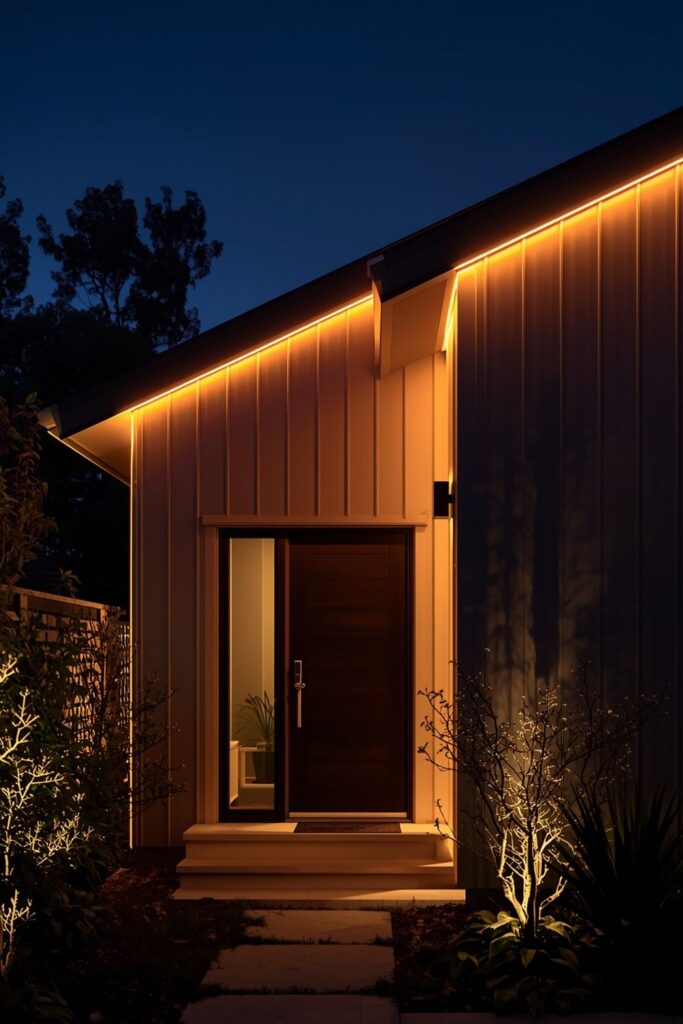
Darkness is part of the composition
Interior spaces rarely ask us to illuminate every surface equally, yet outside we often fall into exactly that habit.
Perhaps it comes from a desire to feel secure, or perhaps from seeing too many examples where every tree, wall, and planting bed has been given its own spotlight.
The result can feel very flat.
When everything is visible, nothing becomes particularly interesting.
Darkness creates hierarchy, and allows certain areas to emerge while others recede. It gives the eye somewhere to rest and creates a sense of depth that bright, uniform lighting struggles to achieve.
This does not mean creating unsafe spaces or leaving pathways unreadable. It simply means recognising that shadow is doing some of the design work.
A home without darkness is a little like a room without contrast. Everything becomes equally important, which often means very little feels important at all.
Light where people are, not where the fixtures fit
One of the more useful shifts in thinking is moving away from lighting objects and towards lighting experiences.
The question becomes less about where fittings can be installed and more about how the space is actually used.
Where do people pause?
Where do conversations naturally gather?
Which route do guests take when arriving after sunset?
Where do people look when they sit down outside?
These behavioural questions tend to reveal more than a landscape plan ever will.
A softly illuminated seating area often contributes more to the overall experience than six perfectly lit planting beds. Likewise, a gentle wash of light along a path usually feels more comfortable than a row of bright fixtures announcing every step.
The goal is not complete visibility – the goal is legibility.
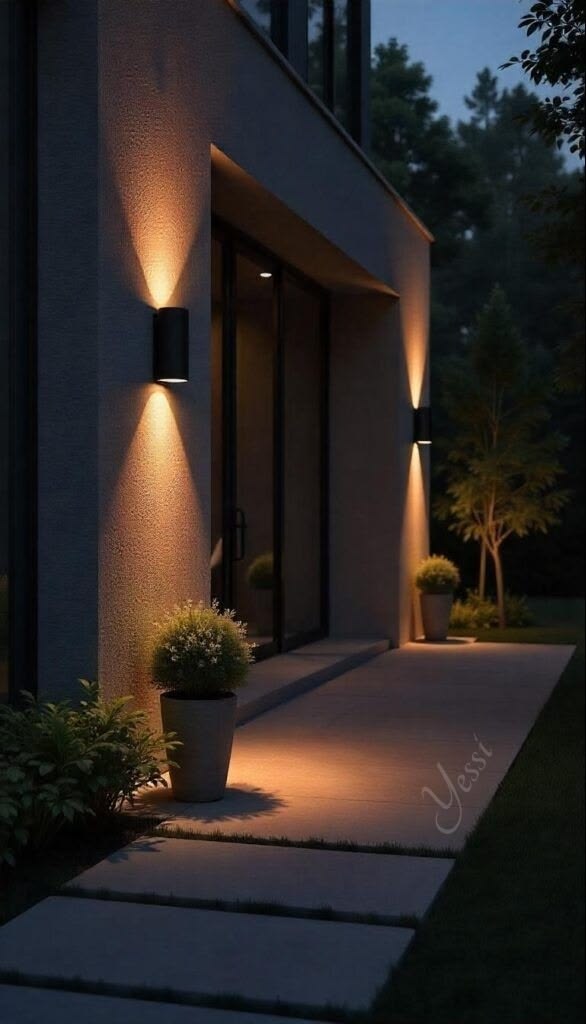
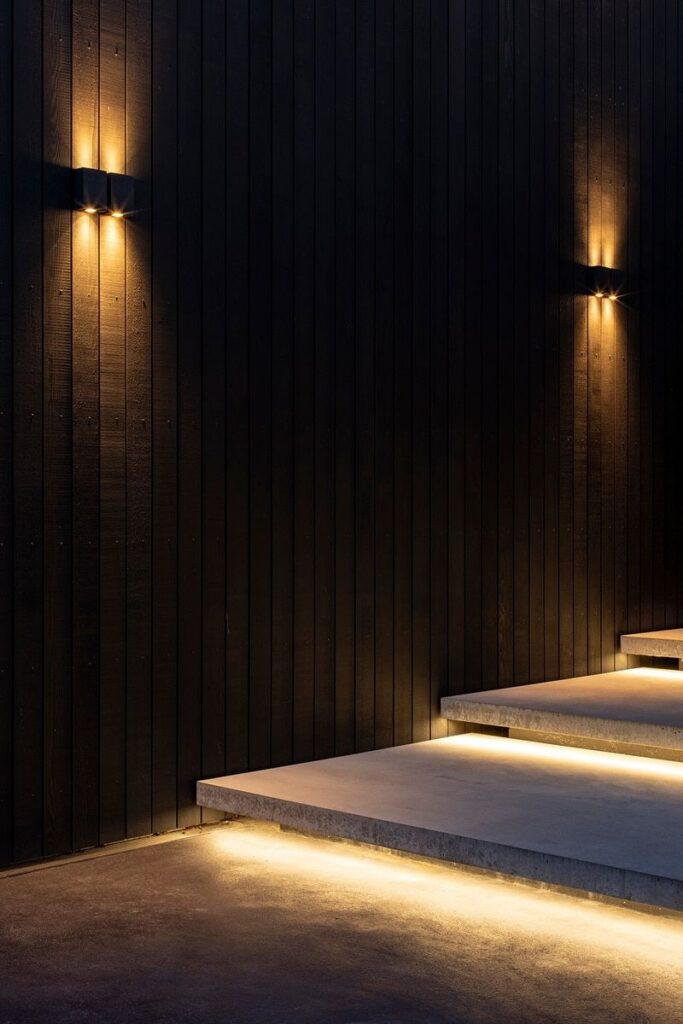
The brightest point attracts attention whether you intended it to or not
Outdoor lighting has a habit of revealing accidental focal points.
A fixture that is slightly too bright near the edge of the garden suddenly becomes the thing everyone notices. A garage wall receives more visual emphasis than the mature maple tree beside it. A pathway becomes brighter than the destination.
Light is remarkably persuasive.
Our eyes naturally move towards brightness, which means every lighting decision is also a decision about attention.
This is why restraint matters.
Rather than asking how much light a feature can take, it is often more useful to ask how little it needs.
The answer is usually less than expected.
Colour temperature changes everything
Few lighting decisions alter atmosphere more quickly than colour temperature.
Cool white light tends to sharpen edges and increase contrast. It can make stone feel colder, foliage feel flatter, and outdoor spaces feel slightly detached from their surroundings.
Warmer light behaves differently.
It softens materials, deepens texture, and generally feels more aligned with how we have experienced evening light throughout human history, whether from candlelight, firelight, or low sunset.
This is one reason many homes can feel unexpectedly harsh despite having attractive fixtures. The fittings themselves may not be the issue. The quality of light they produce often is.
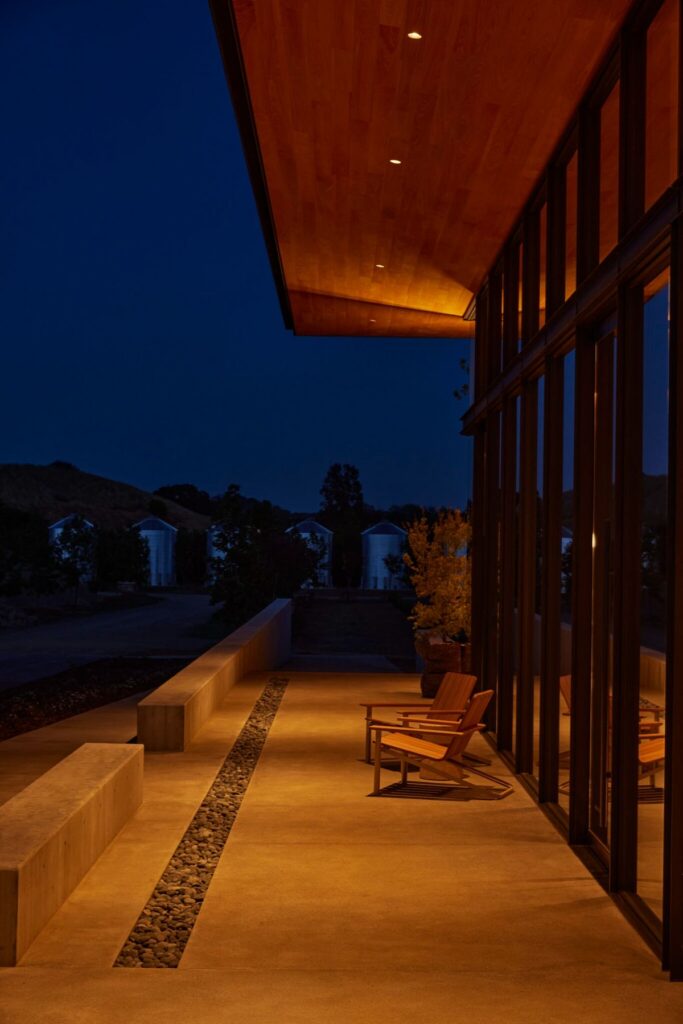
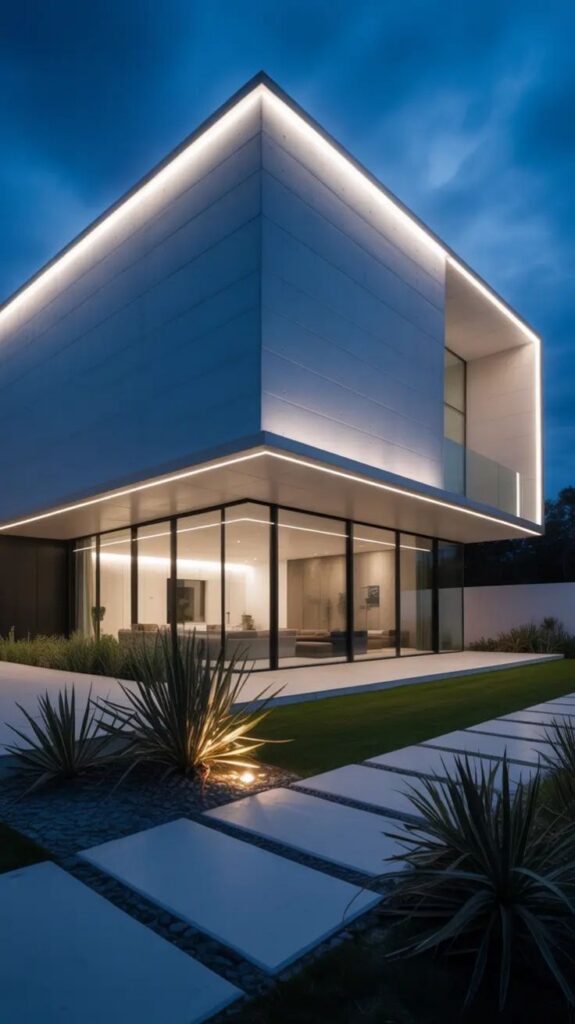
A garden is experienced in movement
Unlike a living room, an outdoor space is rarely viewed from one position.
People move through it.
They walk towards the front door, they cross the patio carrying plates, they wander into the garden and return again.
Because of this, lighting that only works from a single viewpoint tends to feel less successful over time.
The most comfortable schemes reveal themselves gradually. Certain elements appear, others disappear, while Views unfold as you move through the space rather than presenting themselves all at once.
There=v is something inherently calming about that experience.
It feels closer to discovery than display.
Lighting should support the evening, not become the event
Perhaps the most useful test is this:
If someone spends an evening outside, what do you want them remembering afterwards?
The fittings?
Or the experience of being there?
The most successful exterior lighting tends to disappear into the background of memory. People remember the conversation, the garden, the feeling of the space, the sense of comfort after sunset.
The lighting simply made those moments possible.
And perhaps that is where many over lit homes gardens lose their way – they ask lighting to perform as the main attraction, when its real role is much different than that.
The best outdoor lighting design rarely announces itself… It simply creates the conditions for everything else to happen.
Moving away from brightness is the goal for outdoor lighting design
There is a particular kind of outdoor exterior lighting that seems designed to eliminate night altogether.
Every pathway illuminated, every shrub spotlighted, every corner of the home is pushed into visibility as though darkness itself has become a problem to solve.
Yet the homes people tend to remember rarely feel like that.
They feel warmer and more atmospheric, perhaps less concerned with showing everything at once.
The assumption that successful exterior lighting means making a house brighter is surprisingly persistent, but brightness and comfort are not the same thing. In many cases they work against one another, because the more evenly illuminated a landscape and house becomes, the less depth, mystery, and visual rest it contains.
A home at night is not simply a daytime house with the lights turned on. It becomes an entirely different environment, and lighting works best when it acknowledges that shift rather than trying to resist it.
Good outdoor lighting design often begins with deciding what does not need to be lit.
Darkness is part of the composition
Interior spaces rarely ask us to illuminate every surface equally, yet outside we often fall into exactly that habit.
Perhaps it comes from a desire to feel secure, or perhaps from seeing too many examples where every tree, wall, and planting bed has been given its own spotlight.
The result can feel very flat.
When everything is visible, nothing becomes particularly interesting.
Darkness creates hierarchy, and allows certain areas to emerge while others recede. It gives the eye somewhere to rest and creates a sense of depth that bright, uniform lighting struggles to achieve.
This does not mean creating unsafe spaces or leaving pathways unreadable. It simply means recognising that shadow is doing some of the design work.
A home without darkness is a little like a room without contrast. Everything becomes equally important, which often means very little feels important at all.
Light where people are, not where the fixtures fit
One of the more useful shifts in thinking is moving away from lighting objects and towards lighting experiences.
The question becomes less about where fittings can be installed and more about how the space is actually used.
Where do people pause?
Where do conversations naturally gather?
Which route do guests take when arriving after sunset?
Where do people look when they sit down outside?
These behavioural questions tend to reveal more than a landscape plan ever will.
A softly illuminated seating area often contributes more to the overall experience than six perfectly lit planting beds. Likewise, a gentle wash of light along a path usually feels more comfortable than a row of bright fixtures announcing every step.
The goal is not complete visibility – the goal is legibility.
The brightest point attracts attention whether you intended it to or not
Outdoor lighting has a habit of revealing accidental focal points.
A fixture that is slightly too bright near the edge of the garden suddenly becomes the thing everyone notices. A garage wall receives more visual emphasis than the mature maple tree beside it. A pathway becomes brighter than the destination.
Light is remarkably persuasive.
Our eyes naturally move towards brightness, which means every lighting decision is also a decision about attention.
This is why restraint matters.
Rather than asking how much light a feature can take, it is often more useful to ask how little it needs.
The answer is usually less than expected.
Colour temperature changes everything
Few lighting decisions alter atmosphere more quickly than colour temperature.
Cool white light tends to sharpen edges and increase contrast. It can make stone feel colder, foliage feel flatter, and outdoor spaces feel slightly detached from their surroundings.
Warmer light behaves differently.
It softens materials, deepens texture, and generally feels more aligned with how we have experienced evening light throughout human history, whether from candlelight, firelight, or low sunset.
This is one reason many homes can feel unexpectedly harsh despite having attractive fixtures. The fittings themselves may not be the issue. The quality of light they produce often is.
A garden is experienced in movement
Unlike a living room, an outdoor space is rarely viewed from one position.
People move through it.
They walk towards the front door, they cross the patio carrying plates, they wander into the garden and return again.
Because of this, lighting that only works from a single viewpoint tends to feel less successful over time.
The most comfortable schemes reveal themselves gradually. Certain elements appear, others disappear, while Views unfold as you move through the space rather than presenting themselves all at once.
There=v is something inherently calming about that experience.
It feels closer to discovery than display.
Lighting should support the evening, not become the event
Perhaps the most useful test is this:
If someone spends an evening outside, what do you want them remembering afterwards?
The fittings?
Or the experience of being there?
The most successful exterior lighting tends to disappear into the background of memory. People remember the conversation, the garden, the feeling of the space, the sense of comfort after sunset.
The lighting simply made those moments possible.
And perhaps that is where many over lit homes gardens lose their way – they ask lighting to perform as the main attraction, when its real role is much different than that.
The best outdoor lighting design rarely announces itself… It simply creates the conditions for everything else to happen.


LEAVE A COMMENT
Comments