

There is a difference between lighting that looks good in a photograph and lighting that actually works when you are standing at the mirror trying to get ready for your day. Bathroom lighting that doesn’t distort your face is not about creating atmosphere or mood, it is about accuracy, consistency, and making sure the reflection you are working with is reliable enough to base real decisions on.
Most bathrooms are not designed with this in mind. They are designed to meet a basic level of brightness, often with a single ceiling fixture and perhaps a decorative light above the mirror, and while that may technically illuminate the room, it does very little to support the way people actually use the space. If your lighting is causing shadows, uneven colour, or glare, then it is actively working against you, and no amount of adjustment in your routine will compensate for that.
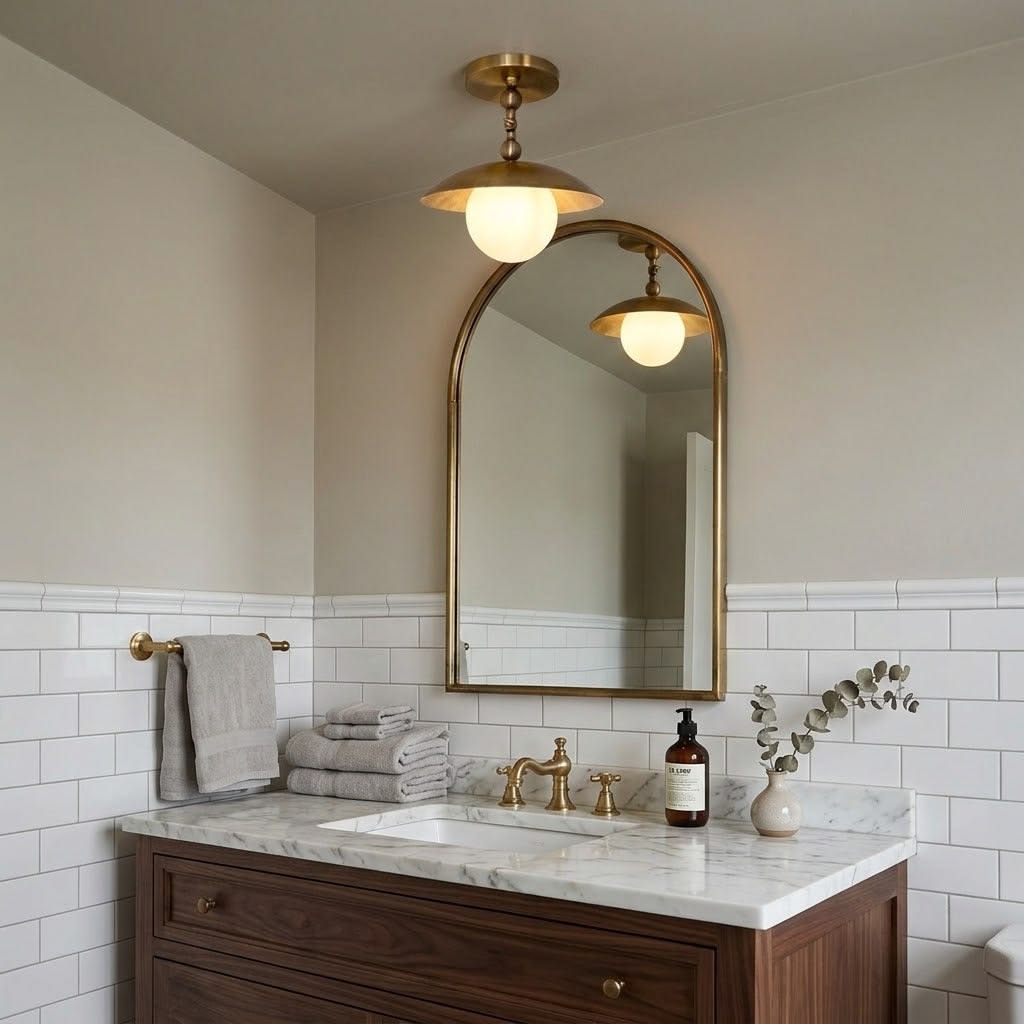
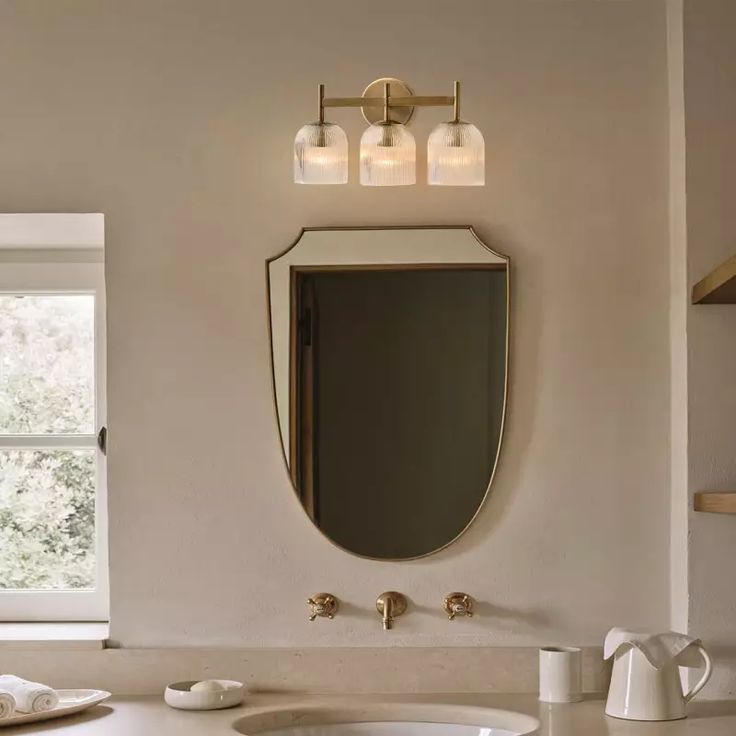
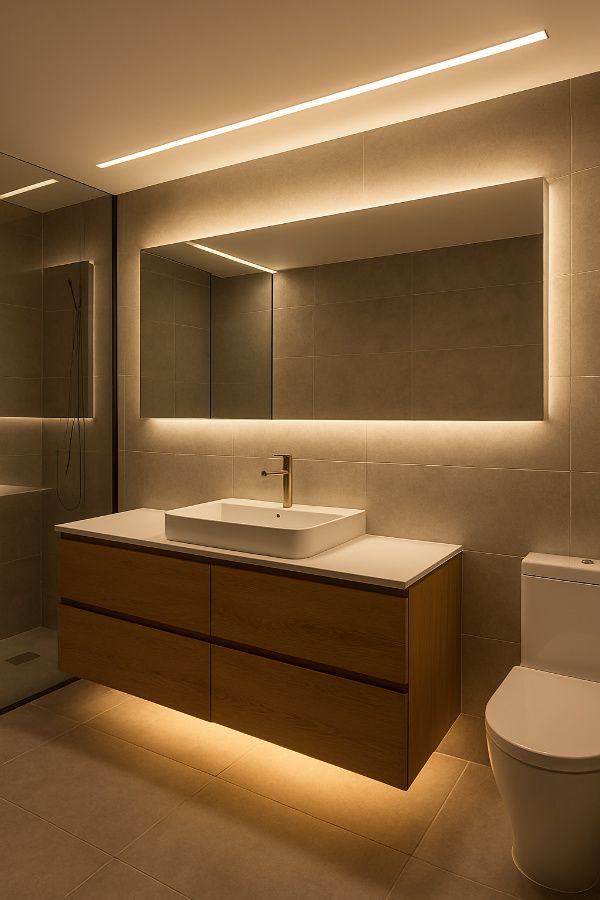
The direction that light travels in a bathroom has a direct impact on how your features appear, and this is where most setups begin to fail. When light comes from above, which is the default in many spaces (as seen above), it casts shadows downward across the face, creating darkness under the eyes, around the nose, and beneath the chin, which can exaggerate texture and make your face appear more tired or uneven than it actually is.
Bathroom lighting starts with direction
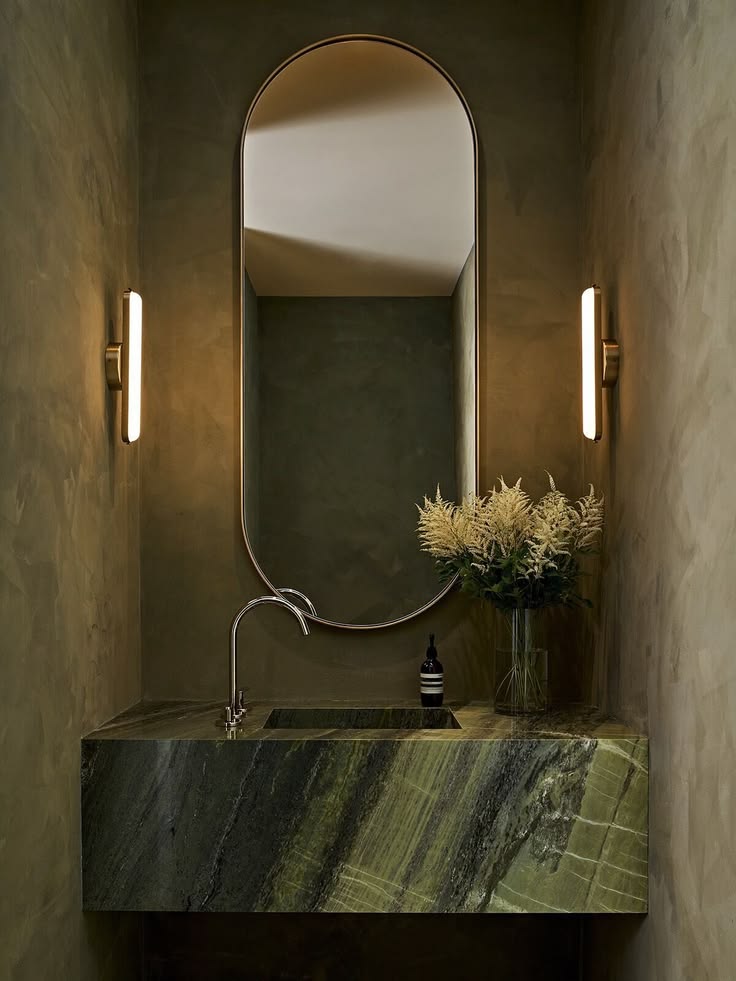
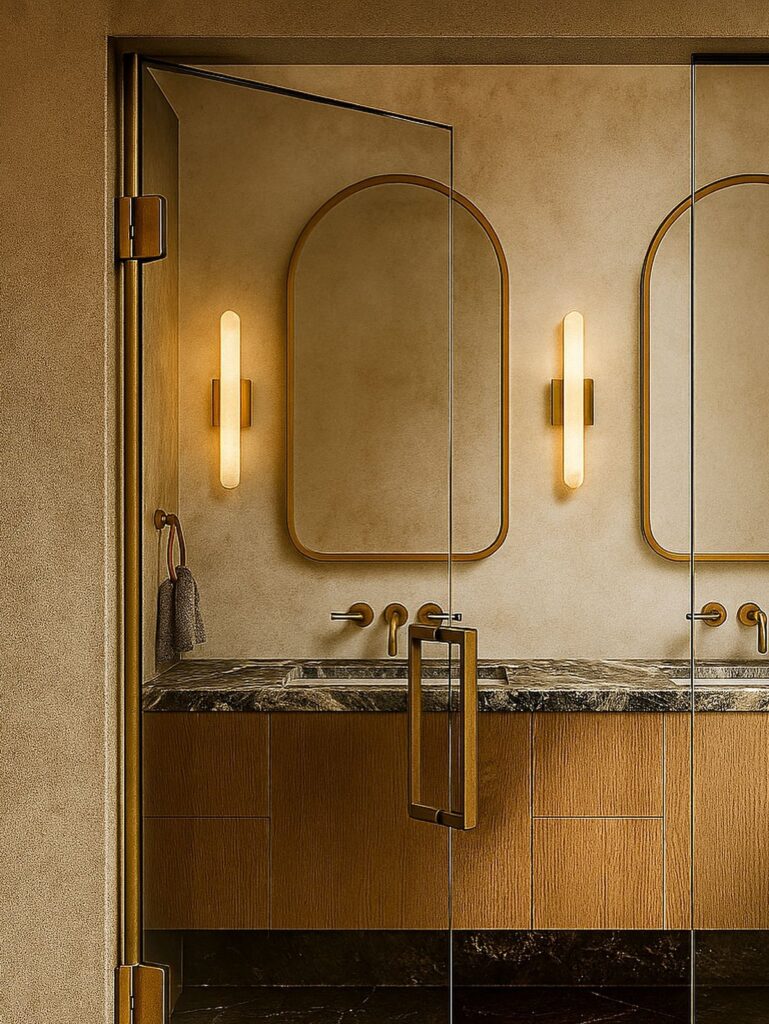
Bathroom lighting should meet your face from the front rather than falling onto it from above, because front facing light fills in shadows instead of creating them. This is why side mounted lighting at the mirror is consistently the most effective solution, as it allows light to travel horizontally across your face, creating a more balanced and accurate view.
When fixtures are placed on either side of the mirror at approximately eye level, the light wraps across your features in a way that reduces contrast and reveals true skin tone, which is essential for tasks like applying makeup, shaving, or even just assessing how your skin looks in natural conditions. If you rely only on overhead lighting, you are effectively working with incomplete information.
Mirror lighting is a task, not a feature
It helps to think of mirror lighting as a tool rather than a decorative element, because once you shift your thinking in that direction, the decisions become clearer and more grounded in function. Bathroom lighting should treat the mirror as a workspace, which means it needs dedicated lighting that is separate from general room illumination.
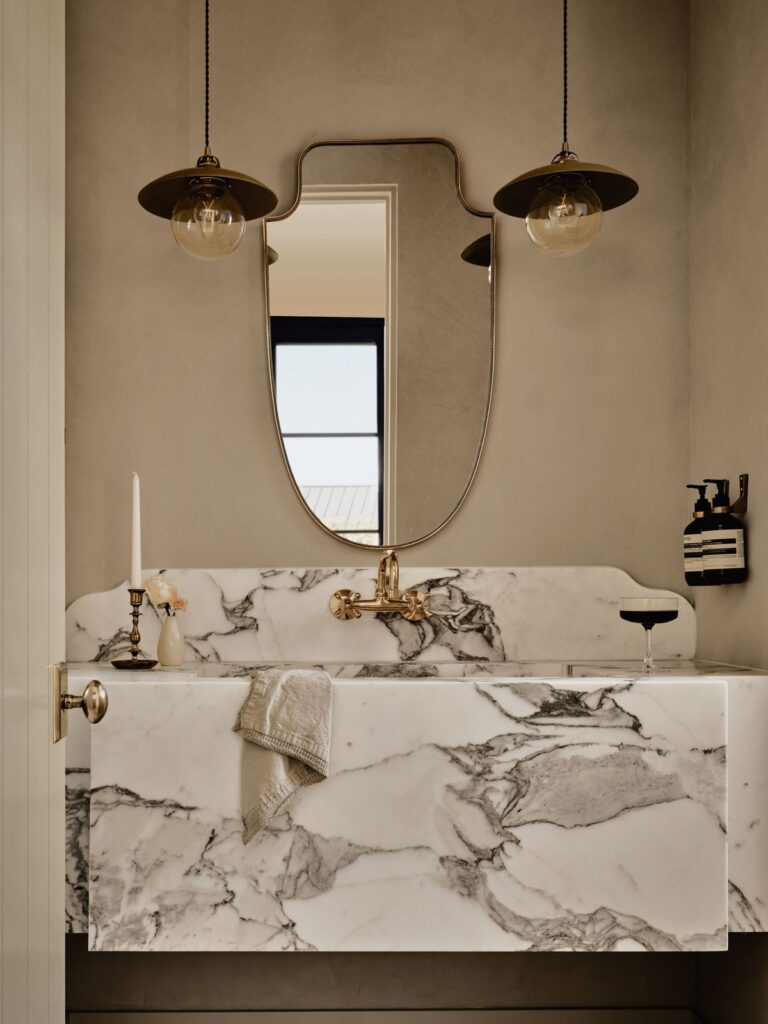
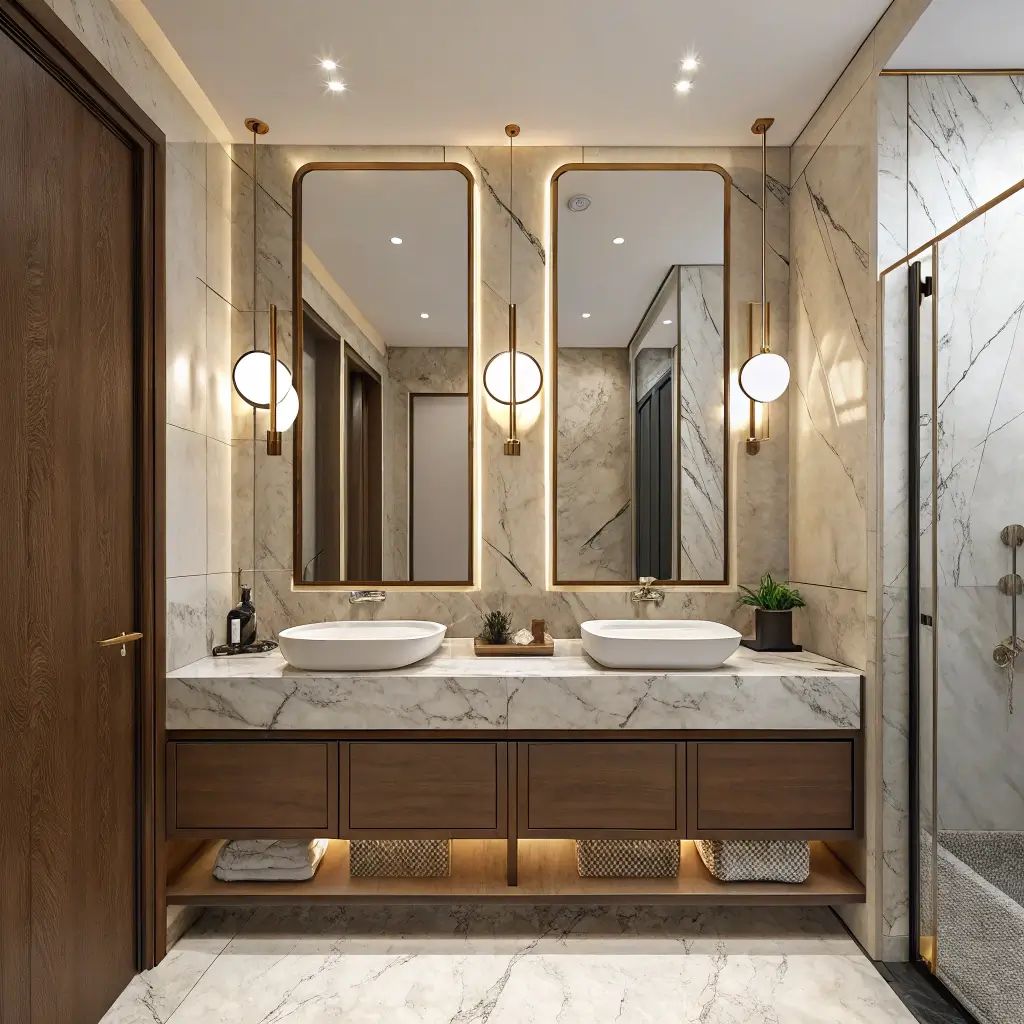
A single fixture centred above the mirror often creates a bright spot at the top and a gradual falloff towards the bottom, which results in uneven lighting across the face, particularly around the jawline and neck. This can lead to overcompensation in grooming or makeup, simply because the lower half of the face is not being lit with the same clarity as the upper half.
Vertical fixtures placed on both sides of the mirror solve this problem by distributing light more evenly from top to bottom, ensuring that your entire face is visible under similar conditions. If side placement is not possible due to space or layout constraints, then a well positioned horizontal fixture with proper diffusion can work, but it needs to be installed with intention rather than treated as an afterthought.
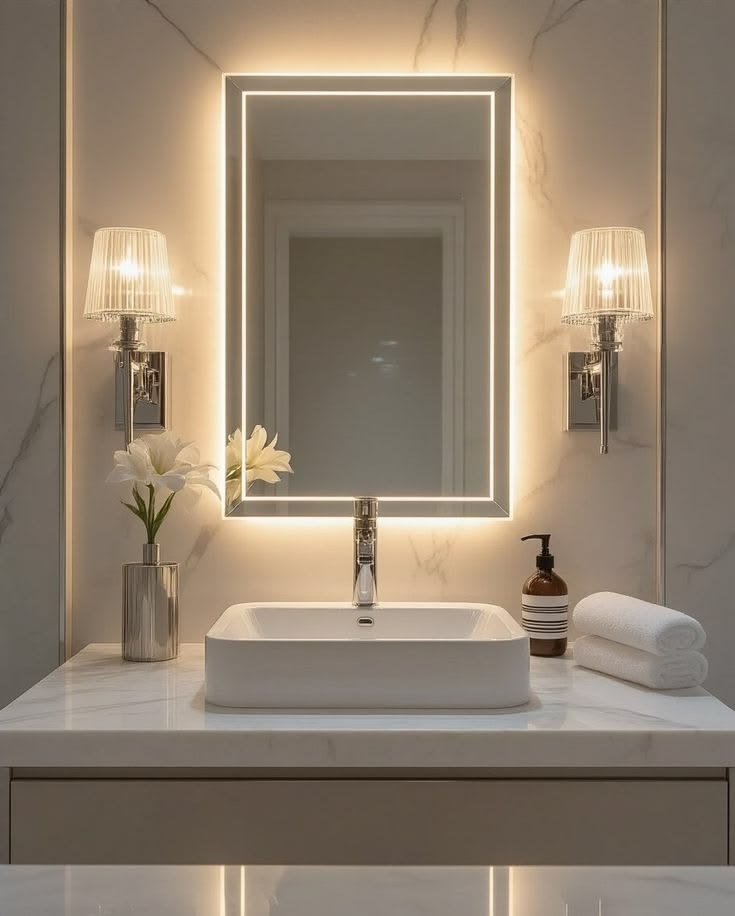
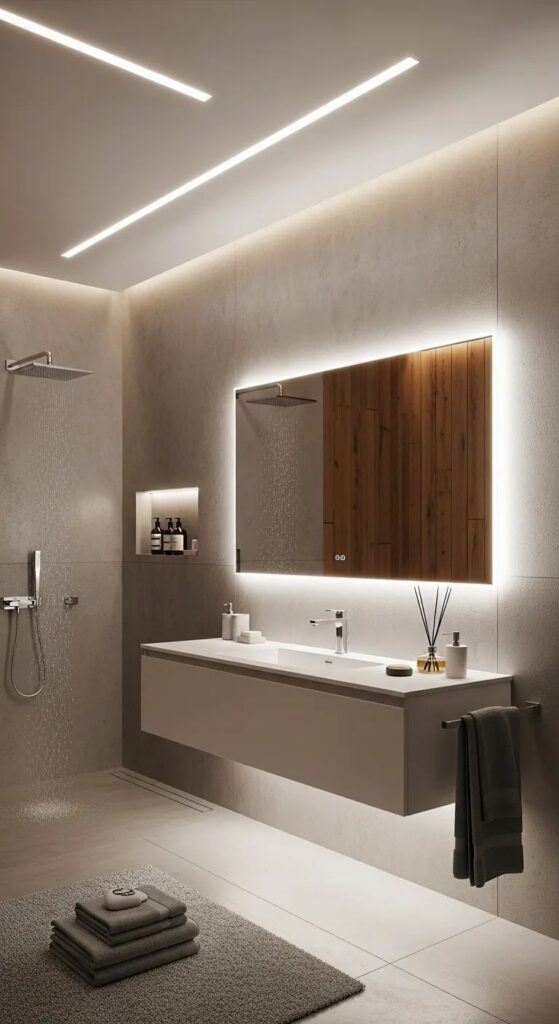
Backlit mirrors are often marketed as a complete solution, but in practice they tend to provide ambient glow rather than focused task lighting, which means they rarely offer enough forward facing illumination on their own. They can be part of a layered approach, but they should not be relied on as the primary source if accuracy is the goal.
Colour temperature – why it matters
Colour temperature has a subtle but powerful effect on how you perceive your face, and it is one of the most overlooked aspects of bathroom lighting. Bathroom lighting depends on a consistent and balanced colour temperature that allows you to see true skin tones without artificial warmth or coolness shifting your perception.
Warm light, which sits in the lower Kelvin range, tends to soften and flatter, but it also adds a yellow or amber cast that can make it difficult to judge undertones accurately. This often results in makeup that appears correct in the bathroom but looks noticeably different in daylight, particularly when it comes to foundation matching.
Cool light, on the other hand, introduces a blue cast that can make skin appear more desaturated and can exaggerate contrast in a way that feels harsh and clinical, which is not particularly helpful when you are trying to achieve a natural or balanced look.
A neutral range, typically between 3000K and 3500K, offers a middle ground that provides clarity without distortion, allowing you to see your skin in a way that translates more reliably into other environments. Bathroom lighting that doesn’t distort your face also requires consistency across all fixtures, because mixing temperatures within the same space forces your eyes to constantly recalibrate, which undermines accuracy.
Designing for routines rather than aesthetics
A bathroom that looks well lit is not necessarily a bathroom that functions well, and this distinction matters a lot. Bathroom lighting should be designed around your routines, which means it prioritizes how the space is used at different times of day and under different conditions.
Morning light tends to be cooler and brighter, while evening light is softer and warmer, and your bathroom lighting should sit comfortably between these extremes so that it feels consistent regardless of the time. This consistency allows you to trust what you see, which reduces the need for second guessing.
As mentioned, layering your light sources can help achieve this balance, with mirror lighting providing task clarity and ambient lighting supporting the overall environment. The key is ensuring that these layers work together rather than competing, which often comes down to matching colour temperature and controlling intensity.
What to change if your lighting is not working
If your current setup is not giving you a clear or reliable reflection, the solution is rarely complicated, but it does require a willingness to priorities function over purely decorative choices. Bathroom lighting that doesn’t distort your face can often be achieved by adjusting a few key elements rather than undertaking a full renovation.
Replacing bulbs with a consistent neutral colour temperature is one of the simplest and most effective changes you can make, particularly if your existing lighting varies across fixtures. Adding side lighting at the mirror, even in a minimal form, can dramatically reduce shadows and improve overall clarity.
Repositioning fixtures so that they align more closely with face height can also make a noticeable difference, as can introducing diffused shades to soften harsh light. Each of these changes addresses a specific issue, and together they create a more cohesive and functional environment.
When these elements are aligned, the result is a bathroom that supports your routine without drawing attention to itself, where your reflection feels stable and accurate, and where the lighting does its job in the background.
There is a difference between lighting that looks good in a photograph and lighting that actually works when you are standing at the mirror trying to get ready for your day. Bathroom lighting that doesn’t distort your face is not about creating atmosphere or mood, it is about accuracy, consistency, and making sure the reflection you are working with is reliable enough to base real decisions on.
Most bathrooms are not designed with this in mind. They are designed to meet a basic level of brightness, often with a single ceiling fixture and perhaps a decorative light above the mirror, and while that may technically illuminate the room, it does very little to support the way people actually use the space. If your lighting is causing shadows, uneven colour, or glare, then it is actively working against you, and no amount of adjustment in your routine will compensate for that.
The direction that light travels in a bathroom has a direct impact on how your features appear, and this is where most setups begin to fail. When light comes from above, which is the default in many spaces (as seen above), it casts shadows downward across the face, creating darkness under the eyes, around the nose, and beneath the chin, which can exaggerate texture and make your face appear more tired or uneven than it actually is.
Bathroom lighting starts with direction
Bathroom lighting should meet your face from the front rather than falling onto it from above, because front facing light fills in shadows instead of creating them. This is why side mounted lighting at the mirror is consistently the most effective solution, as it allows light to travel horizontally across your face, creating a more balanced and accurate view.
When fixtures are placed on either side of the mirror at approximately eye level, the light wraps across your features in a way that reduces contrast and reveals true skin tone, which is essential for tasks like applying makeup, shaving, or even just assessing how your skin looks in natural conditions. If you rely only on overhead lighting, you are effectively working with incomplete information.
Mirror lighting is a task, not a feature
It helps to think of mirror lighting as a tool rather than a decorative element, because once you shift your thinking in that direction, the decisions become clearer and more grounded in function. Bathroom lighting should treat the mirror as a workspace, which means it needs dedicated lighting that is separate from general room illumination.
A single fixture centred above the mirror often creates a bright spot at the top and a gradual falloff towards the bottom, which results in uneven lighting across the face, particularly around the jawline and neck. This can lead to overcompensation in grooming or makeup, simply because the lower half of the face is not being lit with the same clarity as the upper half.
Vertical fixtures placed on both sides of the mirror solve this problem by distributing light more evenly from top to bottom, ensuring that your entire face is visible under similar conditions. If side placement is not possible due to space or layout constraints, then a well positioned horizontal fixture with proper diffusion can work, but it needs to be installed with intention rather than treated as an afterthought.
Backlit mirrors are often marketed as a complete solution, but in practice they tend to provide ambient glow rather than focused task lighting, which means they rarely offer enough forward facing illumination on their own. They can be part of a layered approach, but they should not be relied on as the primary source if accuracy is the goal.
Colour temperature – why it matters
Colour temperature has a subtle but powerful effect on how you perceive your face, and it is one of the most overlooked aspects of bathroom lighting. Bathroom lighting depends on a consistent and balanced colour temperature that allows you to see true skin tones without artificial warmth or coolness shifting your perception.
Warm light, which sits in the lower Kelvin range, tends to soften and flatter, but it also adds a yellow or amber cast that can make it difficult to judge undertones accurately. This often results in makeup that appears correct in the bathroom but looks noticeably different in daylight, particularly when it comes to foundation matching.
Cool light, on the other hand, introduces a blue cast that can make skin appear more desaturated and can exaggerate contrast in a way that feels harsh and clinical, which is not particularly helpful when you are trying to achieve a natural or balanced look.
A neutral range, typically between 3000K and 3500K, offers a middle ground that provides clarity without distortion, allowing you to see your skin in a way that translates more reliably into other environments. Bathroom lighting that doesn’t distort your face also requires consistency across all fixtures, because mixing temperatures within the same space forces your eyes to constantly recalibrate, which undermines accuracy.
Designing for routines rather than aesthetics
A bathroom that looks well lit is not necessarily a bathroom that functions well, and this distinction matters a lot. Bathroom lighting should be designed around your routines, which means it prioritizes how the space is used at different times of day and under different conditions.
Morning light tends to be cooler and brighter, while evening light is softer and warmer, and your bathroom lighting should sit comfortably between these extremes so that it feels consistent regardless of the time. This consistency allows you to trust what you see, which reduces the need for second guessing.
As mentioned, layering your light sources can help achieve this balance, with mirror lighting providing task clarity and ambient lighting supporting the overall environment. The key is ensuring that these layers work together rather than competing, which often comes down to matching colour temperature and controlling intensity.
What to change if your lighting is not working
If your current setup is not giving you a clear or reliable reflection, the solution is rarely complicated, but it does require a willingness to priorities function over purely decorative choices. Bathroom lighting that doesn’t distort your face can often be achieved by adjusting a few key elements rather than undertaking a full renovation.
Replacing bulbs with a consistent neutral colour temperature is one of the simplest and most effective changes you can make, particularly if your existing lighting varies across fixtures. Adding side lighting at the mirror, even in a minimal form, can dramatically reduce shadows and improve overall clarity.
Repositioning fixtures so that they align more closely with face height can also make a noticeable difference, as can introducing diffused shades to soften harsh light. Each of these changes addresses a specific issue, and together they create a more cohesive and functional environment.
When these elements are aligned, the result is a bathroom that supports your routine without drawing attention to itself, where your reflection feels stable and accurate, and where the lighting does its job in the background.


LEAVE A COMMENT
Comments