

There’s more attention now on how light actually feels in the body.
Not just what you see, but how your nervous system responds as the day tapers off, all of it tied to rhythm and the way good lighting follows your circadian rhythm.
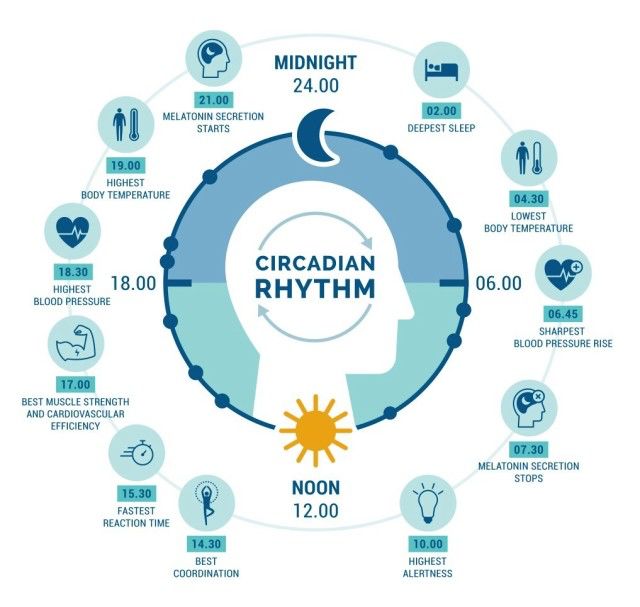
Start with the idea of rhythm, not fixtures
When most people approach bedroom lighting, they start with a checklist. Bedside lamps, an overhead light, maybe a dimmer if they’re thinking it through. The problem is, that approach limits the design. Everything becomes functional, and nothing becomes supportive.
Instead, think in phases.
Morning light is different from evening light, and getting-ready light is different from winding-down light. When you design with rhythm in mind, you’re creating a sequence rather than a single state, which is where bedroom lighting for relaxation starts to make sense as a layered experience rather than a single solution.
Lower light levels early
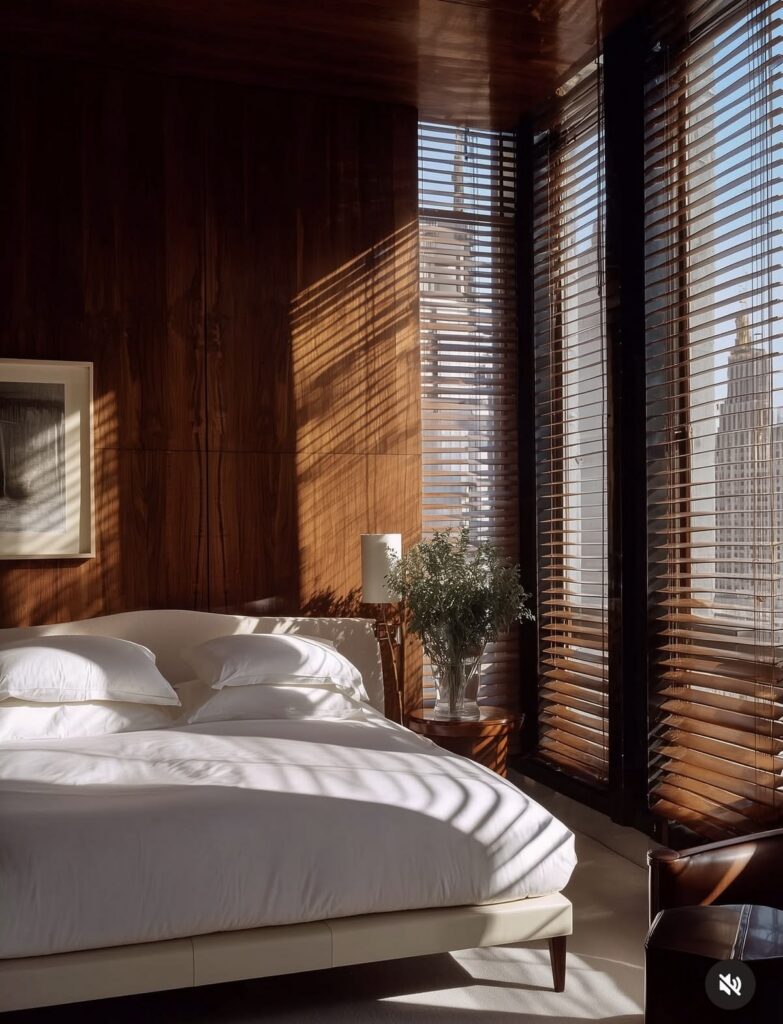
A common mistake is waiting too long to dim things down. If your space stays bright right up until you get into bed, your body hasn’t had time to transition.
Aim to soften the room at least an hour before sleep. Not into darkness, but into something with less visual noise, where intensity drops, contrast softens, and the edges of the room begin to fall away.
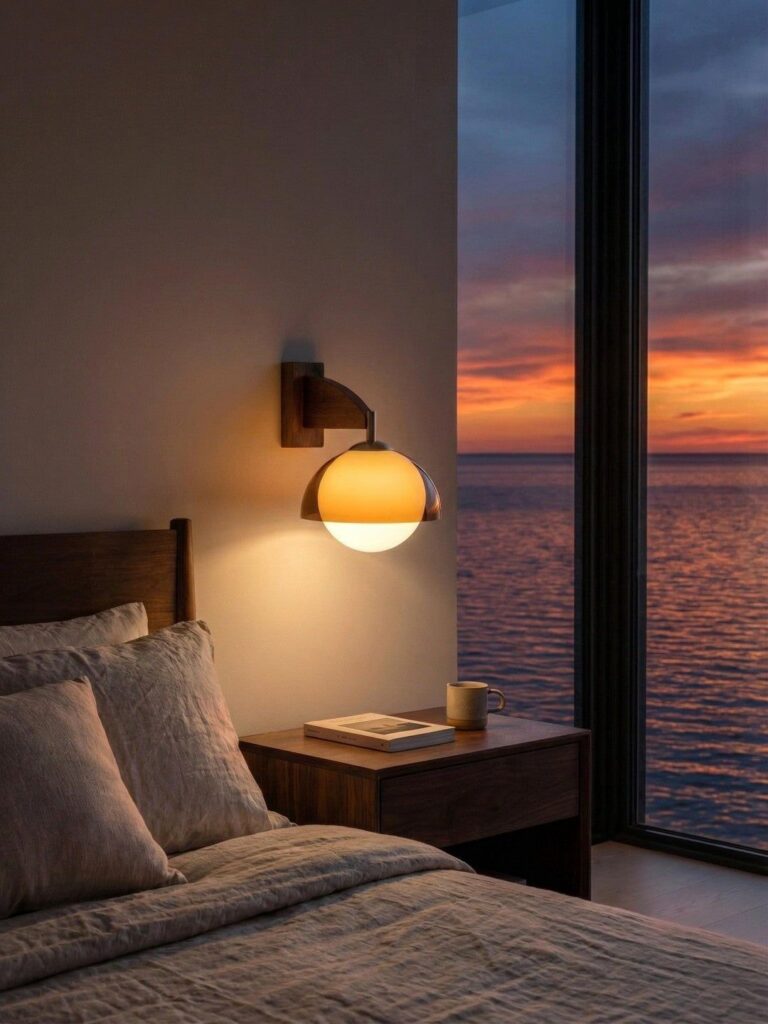
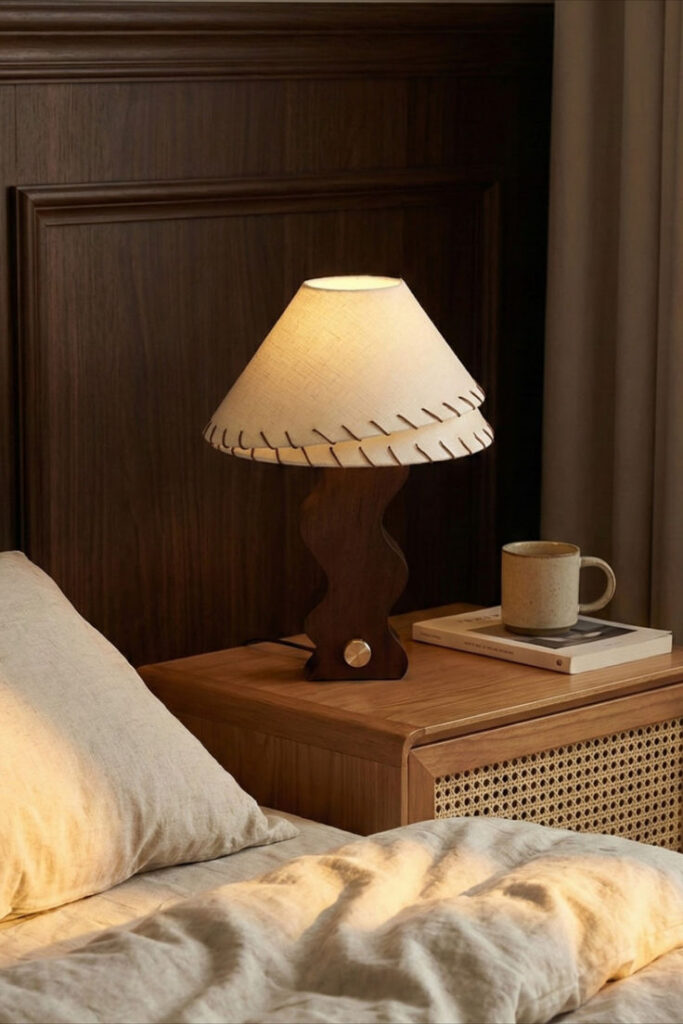
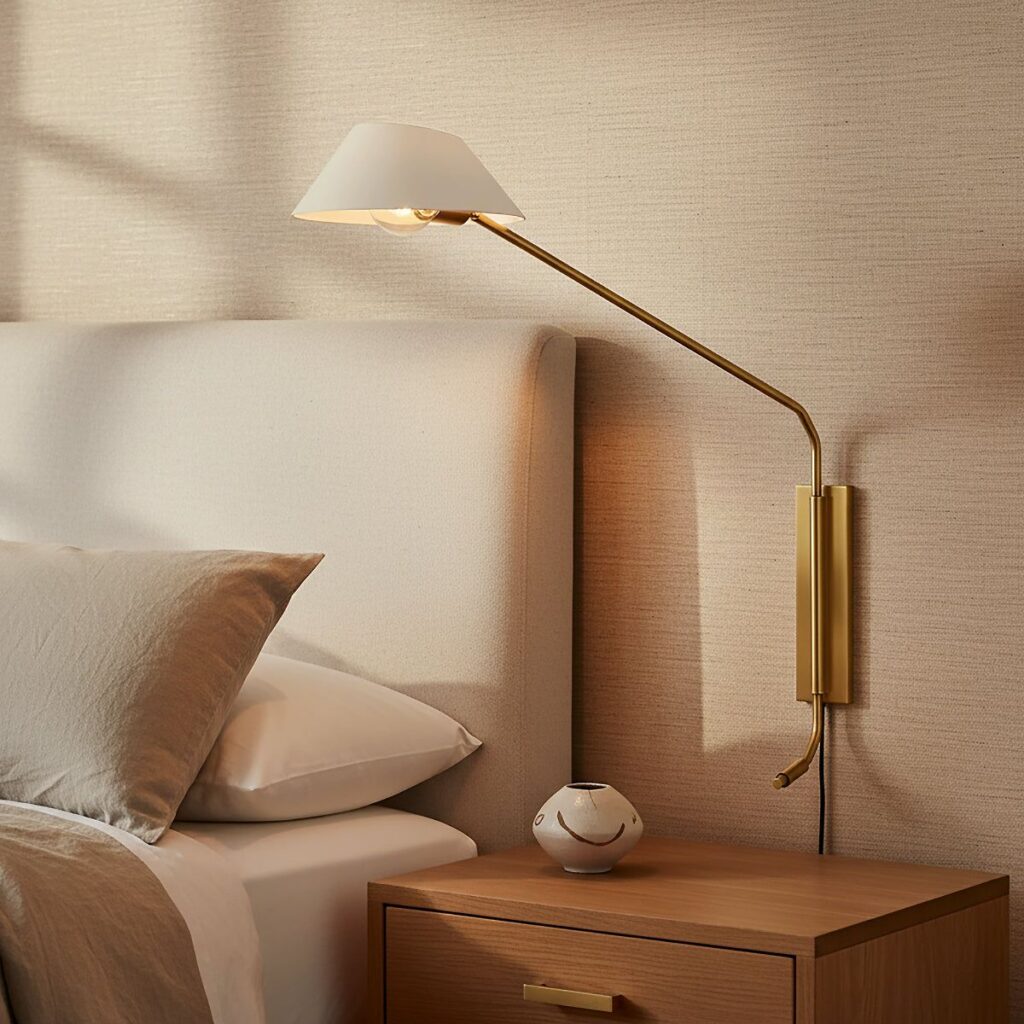
Wall lights and table lamps work well here – as overhead lighting, even when dimmed, can still feel too present. It fills the room evenly, which can be subtly activating.
Instead, try to create pockets of light … a glow beside the bed, a gentle wash across a wall, enough to see, but not enough to stimulate.
Pay attention to colour temperature
Cool, blue-leaning light has its place…. but your bedroom at night isn’t it.
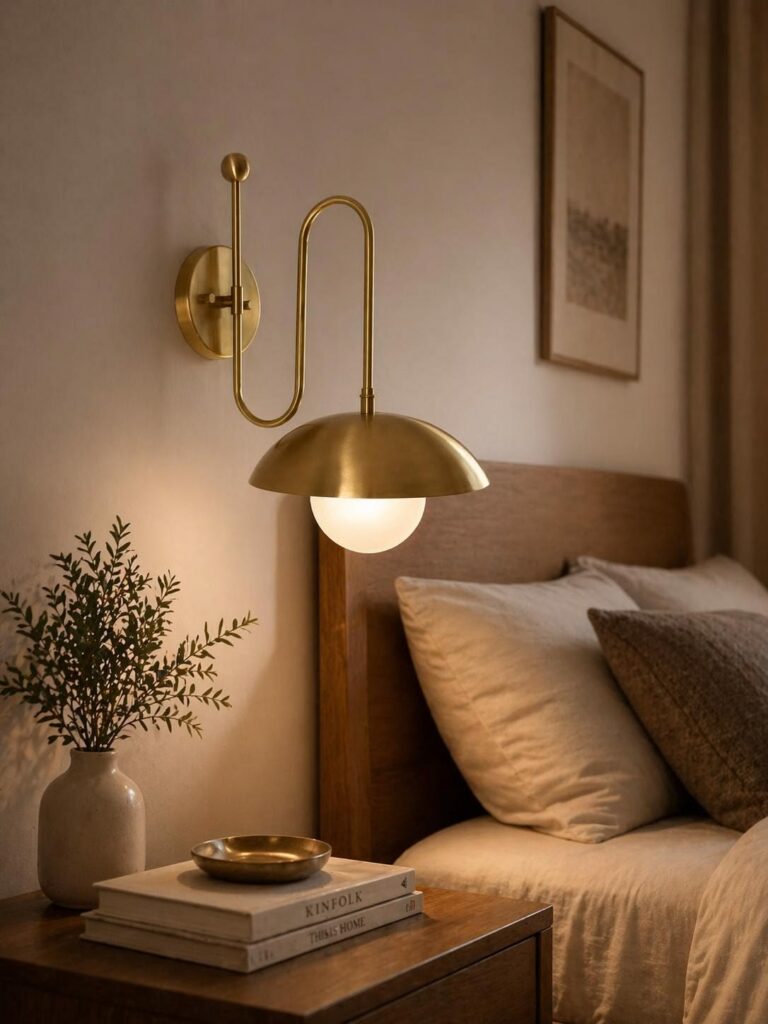
Warmer tones signal to the brain that it’s safe to wind down. It’s not just aesthetic, it’s biological, as light that mimics the warmth of sunset supports the body’s natural circadian rhythm.
Look for bulbs in the 2200K to 2700K range for evening use. Even better if you can dim them down, as warmth deepens as intensity drops.
Layering over brightness
A well-lit bedroom doesn’t need to be bright, just flexible.
Think in layers: ambient light for general visibility, used sparingly at night; task lighting for reading or getting dressed; and accent lighting to create softness and depth. The goal is to avoid relying on any single source. When everything is layered, the room can adjust with you.
It also softens contrast. Harsh shadows and overly bright focal points can feel jarring when you’re trying to unwind. If you want to go deeper into ambient, task, and accent lighting, there’s a free downloadable guide on my website http://www.wylderwoodsdesign.com
Positioning changes everything
Where light comes from matters just as much as how bright it is.
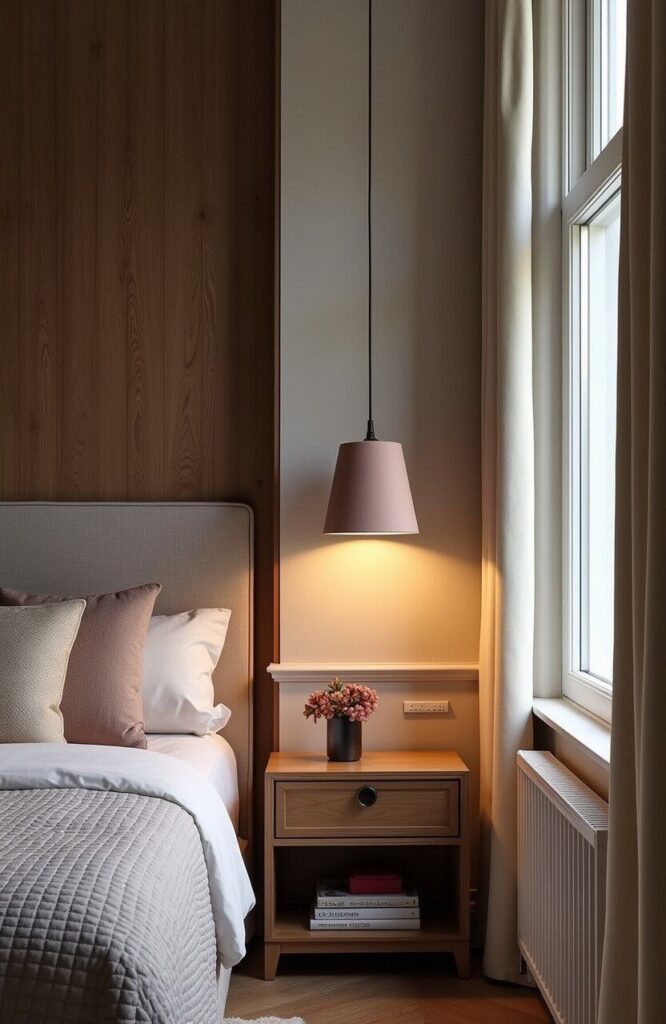
Light at eye level, or slightly below, tends to feel calmer than light from above, which is why bedside lamps and low wall lights feel so grounding.
Pendants sit in this same conversation, and they tend to divide opinion more than you’d expect. I was just talking about this with another designer friend. I lean towards loving them, not just visually but practically. I have a habit of pushing my pillows onto the nightstand in my sleep, and table lamps don’t usually survive that.
She isn’t a fan. For her, they feel too fixed in a space that should stay flexible.
Both approaches work, it just comes down to how you use the space, and whether your lighting supports that or gets in the way.
Make it easy to control
Even the most beautifully designed lighting won’t help if it’s inconvenient to use.
Control should feel intuitive, with dimmers within easy reach. Ideally, you should be able to adjust your lighting without getting out of bed.
It removes friction at the exact moment you’re trying to soften your pace. Small details, but they shape wind-down behaviour more than we realise.
Final Thoughts on bedroom lighting for relaxation
Designing a bedroom that supports rest isn’t about doing more. It’s about choosing with care, then allowing the space to do its job in the background.
When light follows your rhythm rather than fighting it, the room begins to support you. It works with your circadian rhythm instead of against it.
Is your bedroom lighting helping you wind down, or keeping you switched on longer than you realize?
There’s more attention now on how light actually feels in the body.
Not just what you see, but how your nervous system responds as the day tapers off, all of it tied to rhythm and the way good lighting follows your circadian rhythm.
Start with the idea of rhythm, not fixtures
When most people approach bedroom lighting, they start with a checklist. Bedside lamps, an overhead light, maybe a dimmer if they’re thinking it through. The problem is, that approach limits the design. Everything becomes functional, and nothing becomes supportive.
Instead, think in phases.
Morning light is different from evening light, and getting-ready light is different from winding-down light. When you design with rhythm in mind, you’re creating a sequence rather than a single state, which is where bedroom lighting for relaxation starts to make sense as a layered experience rather than a single solution.
Lower light levels early
A common mistake is waiting too long to dim things down. If your space stays bright right up until you get into bed, your body hasn’t had time to transition.
Aim to soften the room at least an hour before sleep. Not into darkness, but into something with less visual noise, where intensity drops, contrast softens, and the edges of the room begin to fall away.
Wall lights and table lamps work well here – as overhead lighting, even when dimmed, can still feel too present. It fills the room evenly, which can be subtly activating.
Instead, try to create pockets of light … a glow beside the bed, a gentle wash across a wall, enough to see, but not enough to stimulate.
Pay attention to colour temperature
Cool, blue-leaning light has its place…. but your bedroom at night isn’t it.
Warmer tones signal to the brain that it’s safe to wind down. It’s not just aesthetic, it’s biological, as light that mimics the warmth of sunset supports the body’s natural circadian rhythm.
Look for bulbs in the 2200K to 2700K range for evening use. Even better if you can dim them down, as warmth deepens as intensity drops.
Layering over brightness
A well-lit bedroom doesn’t need to be bright, just flexible.
Think in layers: ambient light for general visibility, used sparingly at night; task lighting for reading or getting dressed; and accent lighting to create softness and depth. The goal is to avoid relying on any single source. When everything is layered, the room can adjust with you.
It also softens contrast. Harsh shadows and overly bright focal points can feel jarring when you’re trying to unwind. If you want to go deeper into ambient, task, and accent lighting, there’s a free downloadable guide on my website http://www.wylderwoodsdesign.com
Positioning changes everything
Where light comes from matters just as much as how bright it is.
Light at eye level, or slightly below, tends to feel calmer than light from above, which is why bedside lamps and low wall lights feel so grounding.
Pendants sit in this same conversation, and they tend to divide opinion more than you’d expect. I was just talking about this with another designer friend. I lean towards loving them, not just visually but practically. I have a habit of pushing my pillows onto the nightstand in my sleep, and table lamps don’t usually survive that.
She isn’t a fan. For her, they feel too fixed in a space that should stay flexible.
Both approaches work, it just comes down to how you use the space, and whether your lighting supports that or gets in the way.
Make it easy to control
Even the most beautifully designed lighting won’t help if it’s inconvenient to use.
Control should feel intuitive, with dimmers within easy reach. Ideally, you should be able to adjust your lighting without getting out of bed.
It removes friction at the exact moment you’re trying to soften your pace. Small details, but they shape wind-down behaviour more than we realise.
Final Thoughts on bedroom lighting for relaxation
Designing a bedroom that supports rest isn’t about doing more. It’s about choosing with care, then allowing the space to do its job in the background.
When light follows your rhythm rather than fighting it, the room begins to support you. It works with your circadian rhythm instead of against it.
Is your bedroom lighting helping you wind down, or keeping you switched on longer than you realize?

Brandi Wyldewood is the founder of Wylderwoods Lighting & Design. Based on Salt Spring Island, she is a lighting led interior designer focused on creating spaces that support connection between Humans and their Companions. Her work spans residential, rural & commercial interiors, alongside the design of Wylderwoods Enrichment Park, where behavioural insight, spatial planning, & enrichment come together to support calm, regulated experiences for dogs & the people who care for them.
Learn more about Brandi Here.


LEAVE A COMMENT
Comments