

Children’s rooms are some of the most dynamic spaces in a home because they are never truly finished. A room that begins as a place for building blanket forts, creating imaginary worlds and reading bedtime stories eventually becomes a multitude of other things. Thoughtful flexible kids’ room lighting allows the environment to evolve alongside the child, supporting changing routines, emotional needs, & developmental stages without requiring a complete redesign every few years.
The mistake many people make when designing a child’s room is thinking only about the furniture, colours, & decorative elements, while lighting is often treated as the final accessory added after everything else has been decided. In reality, lighting is one of the most powerful design tools in the room because it influences mood, concentration, comfort, safety, & the way a child experiences their environment throughout the day.
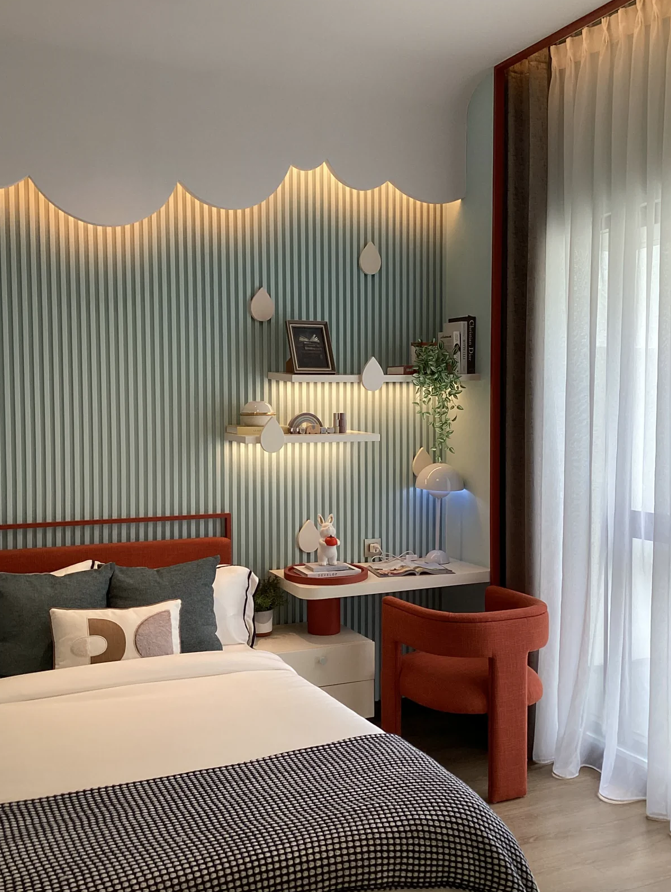
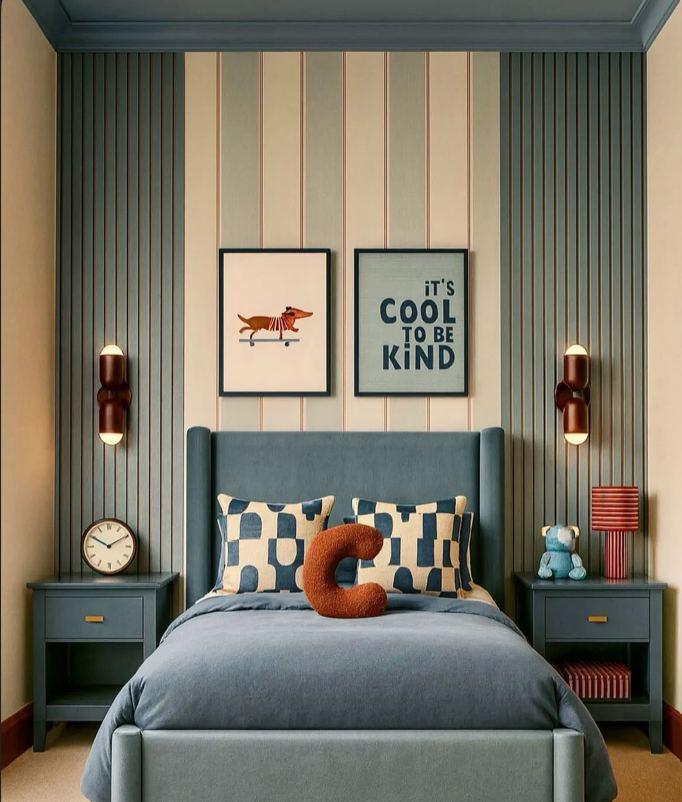
A Room That Changes Requires Lighting That Changes Too
A child’s room has multiple personalities depending on the hour. In the afternoon, it may need bright, energizing light for play, drawing, building, or exploring. Later, the same space needs focused illumination for reading or homework, followed by softer, warmer light that signals the nervous system it is time to slow down.
A single ceiling fixture cannot realistically support all of these activities because it creates one fixed lighting condition for a room that is constantly changing. Effective lighting design uses layers, combining ambient, task, accent, & decorative lighting to create flexibility without visual clutter.
Ambient lighting provides the overall foundation of illumination, helping the room feel balanced and comfortable. Task lighting supports specific activities such as reading at the bedside, working at a desk, or creating artwork. Accent lighting introduces warmth, highlights collections or meaningful objects, & helps create a sense of ownership. Decorative lighting adds personality, giving children permission to feel that their room reflects who they are becoming.
The Importance of Lighting for Development & Wellbeing
Children are deeply connected to their surroundings because their rooms often become the backdrop for learning independence, imagination, creativity and emotional regulation. Lighting plays a silent but significant role in these experiences.
Cooler, brighter light can support alertness during focused activities, making it useful near desks or creative work areas. Warmer, lower-level lighting can encourage relaxation during evening routines, helping create a transition between activity and rest. The ability to shift between these lighting conditions gives children a room that responds to their needs rather than forcing them to adapt to a static environment.
This does not mean every child’s room requires complicated technology or expensive systems. Sometimes the most effective solutions are simple, such as adding a well-positioned reading lamp, installing dimmable ceiling lighting, incorporating wall lights that reduce harsh shadows, or ensuring that switches are placed where children can gradually gain independence.
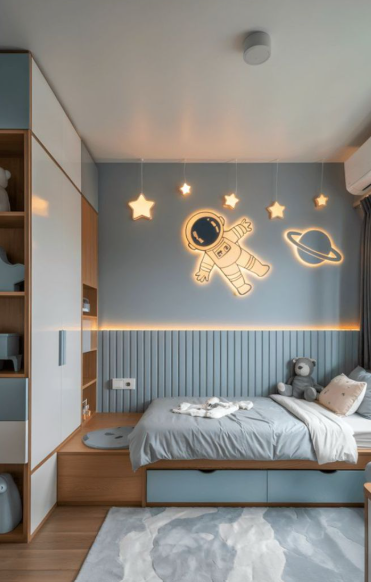
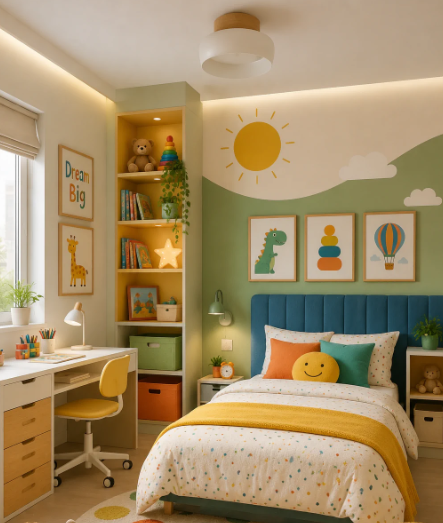
Small Lighting Choices That Create Long-Term Flexibility
One of the easiest ways to future-proof a child’s room is to plan lighting before the furniture layout becomes permanent. Electrical placement matters because moving outlets, switches, or fixtures later can become disruptive & expensive.
Consider incorporating:
- Dimmable overhead lighting to adjust brightness throughout the day.
- Adjustable bedside lamps that support reading as children grow.
- Wall lighting that frees up surface space while adding visual comfort.
- Multiple light sources rather than relying on one central fixture.
- Warm-toned bulbs for evening relaxation.
- Dedicated task lighting for desks, craft areas, or creative spaces.
- Smart controls where appropriate, allowing children to learn how light affects their environment.
The goal is not to create a room filled with gadgets, the goal is to create a room where lighting quietly supports whatever life requires from it.
Creating Spaces Children Feel Connected To
Great design is not only about how a room looks, it’s is about how a room feels. Children notice when spaces are designed around their experiences rather than simply decorated for appearance.
Giving children control over aspects of their lighting, whether through accessible switches, adjustable lamps, or the ability to choose softer evening settings, can help develop confidence and a sense of belonging. Their room becomes more than a place where they sleep, it becomes a place where they create memories, discover interests, solve problems, amd feel at home.
The Future of Children’s Rooms Is Adaptability
The most sustainable approach to children’s interiors is not constantly replacing what no longer fits. It is creating a thoughtful foundation that can evolve. Flexible lighting design reduces unnecessary changes, supports wellbeing and allows a room to mature naturally alongside the person using it.
The question is not simply, “How do we light a child’s room?” The better question is, “How can lighting help this room support the child they are becoming?”
Children’s rooms are some of the most dynamic spaces in a home because they are never truly finished. A room that begins as a place for building blanket forts, creating imaginary worlds and reading bedtime stories eventually becomes a multitude of other things. Thoughtful flexible kids’ room lighting allows the environment to evolve alongside the child, supporting changing routines, emotional needs, & developmental stages without requiring a complete redesign every few years.
The mistake many people make when designing a child’s room is thinking only about the furniture, colours, & decorative elements, while lighting is often treated as the final accessory added after everything else has been decided. In reality, lighting is one of the most powerful design tools in the room because it influences mood, concentration, comfort, safety, & the way a child experiences their environment throughout the day.
A Room That Changes Requires Lighting That Changes Too
A child’s room has multiple personalities depending on the hour. In the afternoon, it may need bright, energizing light for play, drawing, building, or exploring. Later, the same space needs focused illumination for reading or homework, followed by softer, warmer light that signals the nervous system it is time to slow down.
A single ceiling fixture cannot realistically support all of these activities because it creates one fixed lighting condition for a room that is constantly changing. Effective lighting design uses layers, combining ambient, task, accent, & decorative lighting to create flexibility without visual clutter.
Ambient lighting provides the overall foundation of illumination, helping the room feel balanced and comfortable. Task lighting supports specific activities such as reading at the bedside, working at a desk, or creating artwork. Accent lighting introduces warmth, highlights collections or meaningful objects, & helps create a sense of ownership. Decorative lighting adds personality, giving children permission to feel that their room reflects who they are becoming.
The Importance of Lighting for Development & Wellbeing
Children are deeply connected to their surroundings because their rooms often become the backdrop for learning independence, imagination, creativity and emotional regulation. Lighting plays a silent but significant role in these experiences.
Cooler, brighter light can support alertness during focused activities, making it useful near desks or creative work areas. Warmer, lower-level lighting can encourage relaxation during evening routines, helping create a transition between activity and rest. The ability to shift between these lighting conditions gives children a room that responds to their needs rather than forcing them to adapt to a static environment.
This does not mean every child’s room requires complicated technology or expensive systems. Sometimes the most effective solutions are simple, such as adding a well-positioned reading lamp, installing dimmable ceiling lighting, incorporating wall lights that reduce harsh shadows, or ensuring that switches are placed where children can gradually gain independence.
Small Lighting Choices That Create Long-Term Flexibility
One of the easiest ways to future-proof a child’s room is to plan lighting before the furniture layout becomes permanent. Electrical placement matters because moving outlets, switches, or fixtures later can become disruptive & expensive.
Consider incorporating:
- Dimmable overhead lighting to adjust brightness throughout the day.
- Adjustable bedside lamps that support reading as children grow.
- Wall lighting that frees up surface space while adding visual comfort.
- Multiple light sources rather than relying on one central fixture.
- Warm-toned bulbs for evening relaxation.
- Dedicated task lighting for desks, craft areas, or creative spaces.
- Smart controls where appropriate, allowing children to learn how light affects their environment.
The goal is not to create a room filled with gadgets, the goal is to create a room where lighting quietly supports whatever life requires from it.
Creating Spaces Children Feel Connected To
Great design is not only about how a room looks, it’s is about how a room feels. Children notice when spaces are designed around their experiences rather than simply decorated for appearance.
Giving children control over aspects of their lighting, whether through accessible switches, adjustable lamps, or the ability to choose softer evening settings, can help develop confidence and a sense of belonging. Their room becomes more than a place where they sleep, it becomes a place where they create memories, discover interests, solve problems, amd feel at home.
The Future of Children’s Rooms Is Adaptability
The most sustainable approach to children’s interiors is not constantly replacing what no longer fits. It is creating a thoughtful foundation that can evolve. Flexible lighting design reduces unnecessary changes, supports wellbeing and allows a room to mature naturally alongside the person using it.
The question is not simply, “How do we light a child’s room?” The better question is, “How can lighting help this room support the child they are becoming?”


LEAVE A COMMENT
Comments